


You're automating steps, not outcomes — that's why chaos persists
You wired up forms to Slack, connected a few zaps, and launched a great-looking site. Yet the pipeline is still noisy, sales is still triaging junk leads, and follow-ups slip. That’s what happens when you automate steps (send email, create task, add tag) but never design for outcomes (qualified pipeline, faster replies, shorter sales cycles). The difference is everything.
A beautiful site without a system still leaks revenue
Founders often tell us: “Our new site looks incredible, but conversions are flat.” That’s because design alone can’t carry a broken conversion path. If your primary CTA is a vague “Contact Us,” your form dumps into a shared inbox, and nobody knows which leads to prioritize, your website is a brochure — not a growth engine.
Real-world example: a professional services firm relaunches on Webflow. Traffic rises, time on page rises, even compliments rise. But the form sends all inquiries to info@ and a spreadsheet. Response time is 48 hours. Paid traffic brings mismatched leads. Sales wastes hours qualifying, then blames marketing. Everyone’s busy; nothing moves. That’s design without a system.
Automating steps vs engineering outcomes
Steps are activities. Outcomes are business results. Don’t confuse movement with progress.
- Steps: trigger an email, push a Slack alert, add a CRM tag, send a newsletter, schedule a drip.
- Outcomes: fewer unqualified leads, faster time-to-first-response, higher SQL rate, lower CAC, shorter sales cycles.
When you automate steps, you create motion. When you design for outcomes, you create momentum. The latter requires clear offers, structured intent paths, qualification logic, routing, and measurement — all working together.
What actually drives conversions
A site that performs is built like a system, not a poster. Here’s the short list we implement for clients:
- Clarity over cleverness: a sharp value proposition that names the problem, the audience, and the result. “Modern design + smart automation that shortens your sales cycle” beats vague fluff.
- Intent-specific paths: pages and CTAs for buyers at different stages — book a consult, see pricing guidance, try a diagnostic, download a 1-page checklist.
- Social proof that de-risks action: metrics, recognizable logos, concise case bullets (“22% more SQLs, 35% faster first response”).
- Speed to lead: form-to-calendar in one flow, or instant routing to the right owner with an SLA. If you wait, someone else wins.
- Smart forms, not long forms: a few qualifying fields (company size, urgency, use case) plus progressive profiling. No essays. No guesswork.
- Lead scoring and routing: use n8n to score by fit + intent, create the deal, assign owner, post to the right Slack channel, and set a timer for follow-up.
- Source capture and data hygiene: reliably store UTMs, referrer, landing page, and campaign in your CRM. If you can’t track it, you can’t improve it.
- Post-submit experience: a real thank-you page with next steps, a calendar embed when appropriate, and a pre-call brief to raise show rates.
- Measurement that matters: define submission → MQL → SQL → Closed Won. Review conversion by source and message, not just sessions and clicks.
A quick before/after snapshot
Before: A founder-led agency runs ads to a beautiful homepage. The only CTA is “Let’s Talk.” All leads hit a shared inbox. Someone manually creates CRM entries. Average reply time: 36–48 hours. 70% of leads are unqualified. Paid spend looks okay on CPC but awful on revenue.
After WeCraft: We rebuild on Webflow with intent-specific pages (By Use Case, By Industry, By Outcome). The primary CTA is “Book a Working Session,” with a secondary “Get the ROI Checklist.” The form asks three qualifying questions and writes UTMs + page data to the CRM. An n8n flow scores the lead, routes high-intent to the right AE, auto-creates the deal, posts a structured summary to Slack, and triggers a pre-call brief. Low-fit leads receive a helpful resource sequence, not a meeting. Results: faster first response, higher show rates, fewer wasted calls, and a pipeline the team can trust. (Composite example, not a guarantee — but this is the pattern.)
The WeCraft way
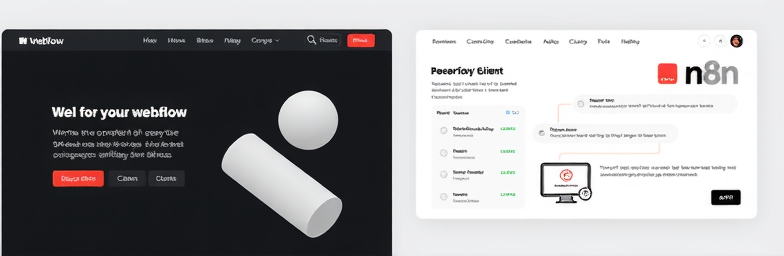
WeCraft Studio builds better systems — online and operationally. We pair modern Webflow design with n8n automation to remove friction from the moments that move revenue. Our approach:
- Outcome-first architecture: we map the jobs your site must do — qualify, route, schedule, and measure.
- Design that performs: fast, accessible, mobile-first pages that make the next step obvious.
- Automation that serves sales: clean data, clear ownership, and SLAs enforced by workflows — not wishful thinking.
- Operator-friendly control: you can update pages, offers, and flows without breaking the system.
Pressure-test your site in 5 minutes
- Can a buyer understand your value in 5 seconds?
- Do you offer clear next steps for different levels of intent?
- Does your form capture what sales actually needs to prioritize?
- Is time-to-first-response measured and enforced?
- Are UTMs and source data reliably saved to your CRM?
- Do you know your MQL→SQL and SQL→Win rates by page and campaign?
Close the chaos gap
Automation isn’t the goal — outcomes are. If your website looks good but still feeds chaos, it’s time to rebuild the system, not just the surface. WeCraft Studio combines modern design with smart automation so your site converts, your team breathes, and your numbers improve. When you’re ready, we’ll help you replace step-by-step noise with end-to-end performance.
Insights That Sparkle
Stay inspired with fresh ideas, industry tips, and behind-the-scenes stories. Our blog is where we share trends, knowledge, and a touch of creativity to help you grow, glow, and stay ahead.
%20(1).png)

.png)
.png)
.png)
%20(1).png)