

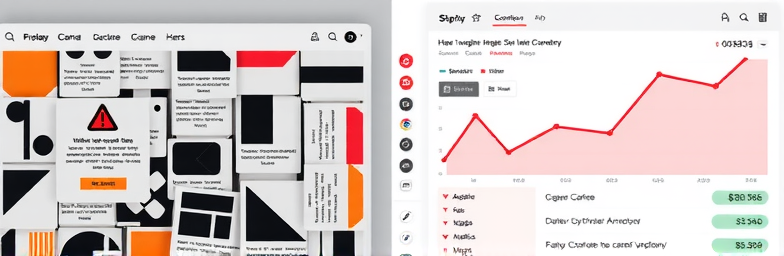
The hidden cost of patching an old site again
You can almost predict the cycle: something breaks, a freelancer jumps in, a plugin gets updated, and the site limps along for another quarter. The homepage still looks fine. But leads are down, the team is chasing form submissions that vanish into inboxes, and every marketing experiment needs a workaround.
Here’s the hard truth: a beautiful website without a conversion system is just a brochure. And brochures don’t reliably grow pipeline.
When pretty doesn’t perform
Many sites score high on aesthetics and low on outcomes. The hero section is cinematic, but the message is vague. CTAs are stylish, but buried. Forms look clean, but ask for eight fields. Pages load slowly on mobile because of oversized images. None of this feels catastrophic in isolation—until you connect it to numbers.
Imagine you spend 10,000 a month on ads to a landing page converting at 2%. A few fixes to speed, messaging clarity, and form friction could lift that to 3.5–4%. That’s not a design win; that’s a revenue win. Patch work rarely produces that lift because patches treat symptoms, not the system.
The invisible costs of patching
- Lost pipeline: If tracking is brittle or forms aren’t integrated with your CRM, you’re flying blind. You can’t improve what you can’t measure.
- Operational drag: Leads trickle into inboxes, not workflows. Sales reps miss first-response speed. Follow-ups depend on memory, not automation.
- Decision debt: Every new campaign requires a developer, another plugin, or a workaround. Marketing slows down; momentum dies.
- Brand erosion: Inconsistent components and one-off pages make the experience feel stitched together. Trust drops and so do conversions.
- Risk exposure: Each patch increases complexity. More dependencies mean more chances something breaks during the next update.
What looks like a cheap fix often costs more in wasted ad spend, missed opportunities, and team time than a proper rebuild.
Conversion is a system, not a page
High-performing websites share a few simple traits:
- Clear narrative: A sharp headline, a relevant subhead, proof, and a single next step.
- Performance by default: Fast LCP, optimized images, and clean code—especially on mobile.
- Purposeful friction: Short forms upfront; progressive profiling later.
- Trust signals: Social proof, outcomes, and objections handled where they occur.
- Instrumentation: A tracking plan, events mapped to the funnel, and clean attribution.
- Automation: Every form routes leads to the right owner, enriches data, triggers follow-ups, and logs to CRM—without manual effort.
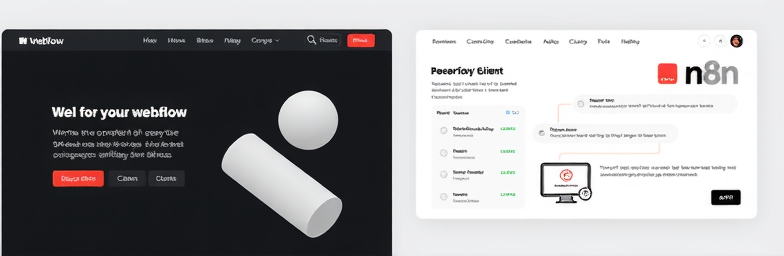
That final point is the difference between a brochure and a growth system. Tools like n8n allow you to build reliable flows: qualify a lead, notify the right channel, enrich with company data, create the CRM record, schedule a personalized email, and hand off to sales—automatically. No human should be copy-pasting from form alerts ever again.
Rebuild vs. repair: when to stop patching
Consider a rebuild when at least two apply:
- You rely on multiple plugins to manage forms, popups, and tracking—and each update risks breaking something.
- Your CMS is hard to change without a developer, so campaigns are slow.
- Analytics are inconsistent; paid and organic numbers don’t agree.
- Page speed on mobile is mediocre despite repeated tweaks.
- Your team avoids touching the site because they’re afraid of breaking it.
That’s not stubbornness; it’s technical debt. And it compounds.
The WeCraft way
WeCraft Studio builds modern Webflow sites with automation baked in. It’s design for performance, not decoration.
- Structure and speed: Component-based design, a clean CMS, accessibility standards, and a performance budget—so pages stay fast as you scale.
- Conversion-first UX: Clear paths, strategic CTAs, objections addressed in context, and forms that convert.
- Measurement that matters: A simple, documented tracking plan tied to business goals. Events mapped to your funnel and QA’d before go-live.
- Automation backbone: With n8n, every lead is routed, enriched, assigned, and followed up. Slack alerts for hot leads, UTM capture for attribution, and CRM updates without human effort.
- Operational clarity: Playbooks your team can actually use—how to launch a page, run a test, and read the numbers.
The result is a site your team trusts, marketing can move fast on, and sales can feel. You stop buying patches and start compounding performance.
Quick self-check
- Can you launch a new landing page in under a day—without a developer?
- Do you know your true conversion rate by channel?
- Does every form create a CRM record with owner, SLA, and follow-up?
- Is mobile speed consistently fast under real traffic?
- Are you running at least one meaningful A/B test per quarter?
If you hesitated on more than one, it’s not a design problem—it’s a system problem.
Conclusion
Patching keeps you moving, but it rarely moves you forward. A conversion-focused rebuild with automation pays for itself in cleaner data, faster execution, and higher pipeline. If you want modern design, smart automation, and tangible business impact, that’s exactly what WeCraft Studio builds.
Insights That Sparkle
Stay inspired with fresh ideas, industry tips, and behind-the-scenes stories. Our blog is where we share trends, knowledge, and a touch of creativity to help you grow, glow, and stay ahead.
%20(1).png)

.png)
.png)
.png)
%20(1).png)