

The hidden cost of patching an old site instead of redesigning
There’s a point where another plugin, another hotfix, another “we’ll just add a pop-up” stops being pragmatic and starts being expensive. Not on paper—expensive in lost leads, wasted ad spend, and team time spent wrestling a site that never really gets better.
Patching feels cheaper. It isn’t.
Founders patch for sensible reasons: speed, budget, disruption. But patches create silent costs:
- Time tax: Your team spends hours coordinating freelancers, approving micro-changes, and testing workarounds.
- Technical debt: Layers of plugins, custom code, and brittle themes make every small change risky.
- Performance decay: Each add-on slows pages and complicates caching. Slower pages convert less—full stop.
- Analytics gaps: Patches rarely fix measurement. Incomplete tracking = bad decisions.
- Compliance and security drift: Outdated scripts and forms risk GDPR/CCPA issues and spam.
Individually, these seem manageable. Together, they cap your growth—long before you notice the ceiling.
A beautiful site that doesn’t convert is expensive design
Pretty websites without conversion systems are like storefronts with no staff. You’ll get compliments, not customers. Aesthetic polish matters, but performance is what pays: clarity, speed, relevance, and a frictionless path to action.
Signs your site is design-rich and conversion-poor:
- Hero looks great, but nobody can tell what you do in 5 seconds.
- CTA is buried or generic (“Learn More”).
- Forms feel long, slow, or break on mobile.
- Proof exists (logos, testimonials) but lacks placement and context.
- Analytics say traffic is fine, yet pipeline is stagnant.
Aesthetics vs performance
Aesthetics: typography, color, motion, layout. Performance: page speed, message clarity, conversion architecture, SEO foundations, data capture, and follow-up automation. A high-performing site makes taking the next step obvious and inevitable.
Performance shows up in the numbers:
- Faster pages reduce abandonment and increase form starts.
- Focused messaging improves relevance and time on page.
- Structured content (CMS) multiplies SEO and repurposing.
- Clean analytics drive smarter spend and iterations.
What actually makes a website convert
- Positioning above the fold: a clear promise for a specific audience, with a concrete next step.
- Intent-led paths: tailored CTAs for high-intent (book a call), mid-intent (pricing, demo), and low-intent (resources) users.
- Credibility at the right moments: proof near claims, objections answered near CTAs.
- Performance first: lean assets, compressed media, minimal scripts, instant load.
- Form logic: short fields, progressive profiling, spam protection, and mobile-first design.
- Complete measurement: events, goals, funnels, UTM hygiene, and source attribution.
- Automation that respects humans: captured leads go straight to your CRM; routing, enrichment, and follow-ups run automatically—no manual spreadsheet limbo.
A quick example
A founder came to us with a mature WordPress site patched over five years. Marketing spent heavily on traffic, yet lead quality was unpredictable and ops were overwhelmed. Hidden costs we found:
- $300–$600/year in overlapping plugins, plus frequent dev hours to keep them from clashing.
- Slow bundle of third-party scripts killing performance on mobile.
- Leads dropped when forms failed silently; analytics never captured the misses.
- Manual triage: an ops manager spent 4–6 hours/week cleaning and routing submissions.
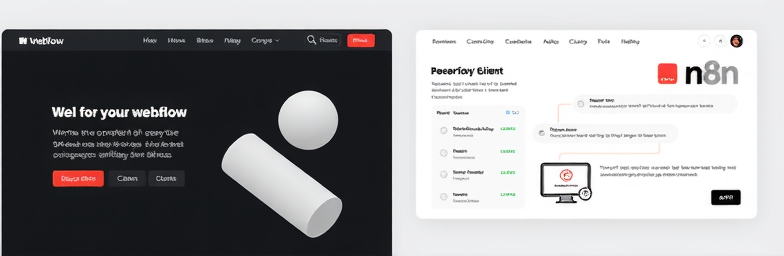
We rebuilt in Webflow with a structured CMS, simplified scripts, and clear conversion paths. n8n automated lead routing and enrichment, pushing clean data into their CRM with proper source attribution. Post-launch, they saw a meaningful conversion lift and reclaimed hours weekly—without any heroic ad spend. Same team, same product, better system.
When redesign beats repair
Choose a rebuild when:
- You can’t change core messaging or navigation without breaking something else.
- Performance fixes require workarounds instead of removals.
- Your tracking story is a patchwork of partial truths.
- Stakeholders avoid touching the site because “it’s fragile.”
A redesign isn’t about vanity. It’s about moving from duct tape to durable systems that compound.
The WeCraft way
WeCraft Studio builds for performance and operations in one move:
- Webflow for speed, stability, and a clean editor your team will actually use.
- Conversion architecture: messaging, page patterns, CTAs, and proof placed with intent.
- Structured content: a CMS aligned to your pipeline and content strategy.
- Full-funnel measurement: analytics, events, source attribution, dashboards.
- n8n automation: capture → enrich → route → notify → follow up. No manual glue.
- Design systems: reusable components so shipping new pages is fast and consistent.
Modern design + smart automation + tangible business impact. That’s the point of a website.
If you’re still patching
Run a quick test: freeze new patches for 30 days. If your team spends less time firefighting and your pipeline doesn’t dip, keep patching. If not, it’s time to rebuild.
When you’re ready, we’ll help you leave the patch cycle behind and launch a site that’s built to convert—and built to scale.
Insights That Sparkle
Stay inspired with fresh ideas, industry tips, and behind-the-scenes stories. Our blog is where we share trends, knowledge, and a touch of creativity to help you grow, glow, and stay ahead.
%20(1).png)

.png)
.png)
.png)
%20(1).png)