

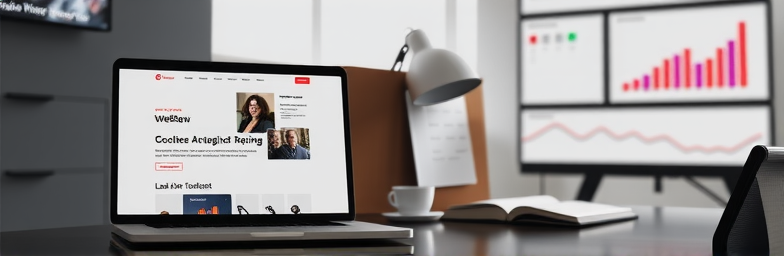
Pretty sites don't pay payroll. Systems behind them do.
Founders don’t lose sleep over kerning. They lose sleep over cash flow, pipeline, and the next payroll run. A beautiful website is nice. But unless it moves a visitor to a meeting, a quote, or a purchase — it’s decor. Revenue comes from systems: the message, the path, the follow-up, and the operations that connect it all.
Why beauty without a backbone fails
The common story: you invest in a redesign, traffic rises, compliments roll in — and leads don’t. Why? Because design alone doesn’t solve the conversion gaps. Your site looks modern, but visitors can’t tell who you help, what you solve, or what to do next. Forms dump into an inbox. Sales doesn’t see new inquiries until tomorrow. No one trusts the analytics. Meanwhile, your team keeps copying data into spreadsheets and chasing ghosts.
That’s the difference between a site and a system. A site is the showroom. A system opens the doors, guides the tour, and closes the sale — then updates the inventory, pings the team, and books the next appointment.
Aesthetics vs. performance
Performance looks boring on a Figma board, but it prints results:
- Clarity beats cleverness. Above the fold, your promise and proof should be painfully obvious. “We cut onboarding time by 40% for B2B teams” is stronger than “We reimagine efficiency.”
- One path per intent. Buyers at research, comparison, and ready-to-buy stages need different CTAs. Don’t make them hunt.
- Friction down, signal up. Forms collect what matters now, enrich the rest later. Ask less, learn more.
- Speed matters. Fast Webflow builds convert better and feel premium. Seconds lost at load are prospects lost forever.
- Proof on display. Numbers, case studies, and real screenshots outpull slogans. Social proof isn’t a footer; it’s a decision tool.
- Instrumentation first. If you can’t measure it, you can’t manage it. Server-side events, source attribution, and funnel tracking aren’t “phase two.”
What actually makes a website convert
A high-performing site is a chain of small, intentional decisions connected by automation:
- Message-market fit in the hero: who you help, what outcome you deliver, and in how much time.
- Opinionated navigation that mirrors your buyer journey: problem → solution → proof → pricing → next step.
- Conversion scaffolding: primary CTA (book, buy, start), supportive micro-CTAs (download, compare, calculate), and follow-up for fence-sitters.
- Data and routing: form to CRM, instant lead scoring, ownership rules, and alerts in Slack so response time is minutes, not days.
- Lifecycle automation: sequences for demo no-shows, quote follow-ups, dormant opportunities, and post-sale handoffs into delivery.
- Closed-loop analytics: attribute revenue back to pages, sources, and messages — then iterate with evidence.
A quick example
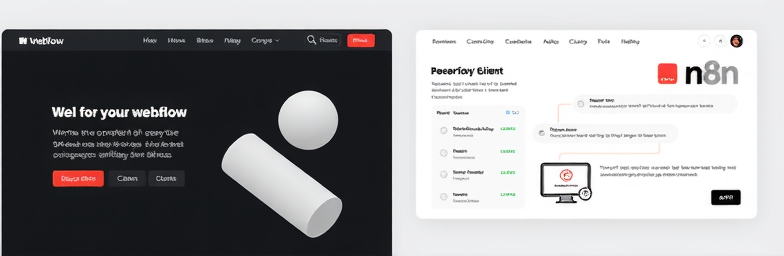
A founder hires a designer, ships a gorgeous site, watches “Contact Us” inquiries trickle in — mostly tire-kickers. We rebuild in Webflow with a tighter offer and clear CTAs (Demo, Pricing, and a ROI calculator). Forms enrich leads automatically, route high-intent ones to the right AE, and trigger a same-minute intro email. N8n scores leads, pushes them into the CRM, creates tasks for sales, drops a summary in Slack, and kicks off a nurture for those not ready. Analytics tie booked demos and won deals back to the exact traffic source and page combinations. The result? Fewer clicks, faster replies, better fit meetings — and a pipeline that compounds week over week.
The WeCraft way
WeCraft Studio builds better systems — both online and operationally.
- Modern Webflow design: fast, maintainable, and built for edits without developer bottlenecks.
- Conversion architecture: positioning, page structure, proof, and CTAs aligned to your sales process.
- Automation with n8n: lead capture, enrichment, routing, follow-up, and handoffs that eliminate manual busywork.
- Tangible measurement: clean analytics, event tracking, and dashboards your team actually uses.
- Operational alignment: your website, CRM, and internal tools talking to each other, not past each other.
Bottom line
Pretty gets compliments. Systems fund headcount. If your site looks the part but doesn’t move the numbers, it’s time to connect design with operations. Build the pipeline, remove the friction, measure what matters, automate the rest. That’s how a website starts paying payroll.
If that’s the gap you’re feeling, WeCraft can help you close it — with modern design, smart automation, and outcomes you can see on the P&L.
Insights That Sparkle
Stay inspired with fresh ideas, industry tips, and behind-the-scenes stories. Our blog is where we share trends, knowledge, and a touch of creativity to help you grow, glow, and stay ahead.
%20(1).png)

.png)
.png)
.png)
%20(1).png)