

Redesign now or keep patching - compounding losses won't wait.
Every founder knows the feeling: something on the site is off, so you patch it. Swap a headline. Add a badge. Install a new form. Traffic keeps coming, but results don’t keep up. Meanwhile, the losses compound—every week of weak conversion is paid for in ad spend, missed pipeline, and manual ops.
Here’s the hard truth: a beautiful website without clear conversion systems is a brochure, not a growth engine. It looks the part while quietly leaking revenue.
A pretty site that doesn’t convert is a silent expense
Design matters—first impressions buy you seconds. But seconds don’t book demos. Without a system behind the pixels, you get superficial wins and financial losses:
- Unclear value: The hero says you’re “innovative,” not what you do or why it’s urgent.
- Vague CTAs: “Learn more” everywhere, “Book a demo” nowhere.
- Friction-filled forms: 12 fields, no autofill, and no feedback. People bail.
- Slow mobile: A 5-second load time erases paid traffic.
- No measurement: You’re optimizing feelings, not events.
- Disconnected ops: Form submissions don’t reach your CRM; sales learns about a lead two days late.
That’s design theatre. It looks modern, but the system behind it can’t turn intent into action.
Aesthetics vs. performance
Think of aesthetics as the showroom and performance as the checkout. You need both, in the right order. Performance looks like this:
- Speed: Under 2 seconds on core pages. Lightweight assets. No bloated plugins.
- Clarity: A sharp problem-solution statement above the fold, with one dominant next step.
- Pathways for intent: Self-serve for researchers, fast-lane for buyers ready to talk.
- Credibility at the point of decision: Proof, pricing signals, outcomes—not trophies.
- Persistent, context-aware CTAs: Book, try, or subscribe where it naturally fits.
- Instrumentation: Events, funnels, and outcomes tracked end-to-end—not just pageviews.
When aesthetics serve performance, your site stops being a museum and starts being a machine.
What actually makes a website convert
- Message-market fit on page: Speak to a single primary audience. “We cut invoice processing from days to minutes” beats “We accelerate operations.”
- Offer clarity: One core offer per journey—demo, trial, or consultation—not all three competing.
- Frictionless booking: Embedded scheduling above the fold on high-intent pages, with time zones and confirmations handled automatically.
- Trust moments, not walls of logos: A 2-sentence case outcome beside the CTA outperforms a distant carousel of brands.
- Performance and accessibility: Fast, responsive, readable. Your best prospect is probably on mobile, in motion.
- Closed-loop automation: Form → enrichment → CRM → routed to the right rep → Slack alert → confirmation → nurture if unqualified. No lead gets lost.
Example: A pricing page with a short qualifier (3 questions), instant Calendly slot, and an automated confirmation sequence will reduce no-shows and lift close rates—without adding headcount.
When to stop patching and redesign
- Conversion under 1–2% on high-intent pages despite steady traffic.
- Mobile bounce much higher than desktop.
- Conflicting CTAs and messages across pages—no clear primary action.
- Editing bottlenecks: Simple copy updates require developers or break layouts.
- Brand/ICP shift since the last build—your story no longer matches your buyer.
- Ops debt: Leads arrive, but routing, follow-up, and reporting are manual.
Patching is for known, contained issues. If the core is unclear, slow, or unmeasurable, you’re paying interest on a bad loan. Redesign, then iterate.
The WeCraft way: modern design + smart automation
At WeCraft Studio, we build systems that compound wins.
- Discovery that sharpens the offer: We align site architecture to buying stages and objections.
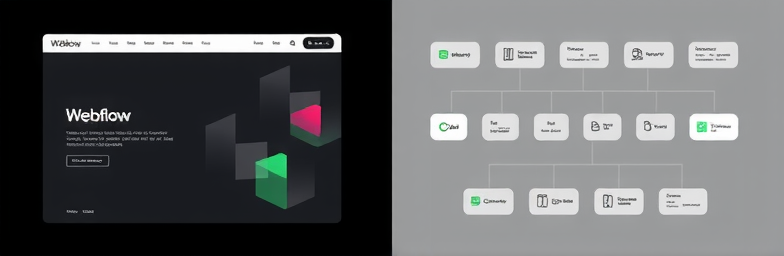
- Design for decisions: Webflow pages built for speed, clarity, and intent—not decoration.
- Conversion infrastructure: Event tracking, goals, and funnel visibility wired from day one.
- n8n automations that remove manual work: Lead enrichment, routing to CRM, Slack alerts, and nurture flows—hands-off, reliable.
- Operational content: CMS structures for landing pages, case studies, and comparisons so your team can ship updates without developers.
A typical flow we implement: Ad click → landing page with a clear promise → short qualifier → instant calendar booking → lead enriched and pushed to your CRM → rep notified in Slack with context → automated reminders to reduce no-shows → post-call sequence for next steps. That’s not flashy; it’s profitable.
Final word
You can keep polishing the brochure, or you can build the machine. If your site looks good but works hard to do nothing, the losses are already compounding. Redesign once, properly—then let small, continuous improvements stack in your favor.
When you’re ready, WeCraft Studio will bring modern Webflow design and n8n automations together so your website stops leaking and starts leading.
Insights That Sparkle
Stay inspired with fresh ideas, industry tips, and behind-the-scenes stories. Our blog is where we share trends, knowledge, and a touch of creativity to help you grow, glow, and stay ahead.
%20(1).png)

.png)
.png)
.png)
%20(1).png)