


Shopify for content sites is expensive duct tape, not a strategy.
Shopify is a world-class commerce engine. But if your business is content-led and conversion-driven, forcing Shopify to run your site is like taping a rocket to a bicycle. It looks clever until you try to steer.
Founders come to us after spending months tweaking a theme and buying apps to make a blog act like a marketing site. The result: a beautiful layout that still leaks revenue. Why. Because aesthetics are not the same as performance, and duct tape is not a strategy.
The hidden cost of duct tape
Content-first sites on Shopify typically bolt on apps for tables of contents, search, redirects, forms, schema, gated content, job listings, and more. Every add-on adds weight, complexity, and dependency. Editing flow slows. Page speed suffers. Analytics break. Teams wait on devs to change a field. You are paying in cash and in momentum.
Worse, your content model bends to fit a storefront template. You end up hacking blog categories to behave like resources, case studies, guides, and landing pages. That means weak internal linking, messy URLs, and limited relationships between content types. Search engines see the mess. Prospects feel the friction.
A beautiful site that does not convert
Design matters. But the prettiest site will underperform if it ignores conversion systems. Here is what we see often:
- No narrative clarity on who it is for and what next step to take
- Slow pages from app bloat and oversized themes
- CTAs that are generic, misplaced, or identical across all templates
- Forms that dump into an inbox instead of a CRM and automation
- Poor content structure, so visitors cannot navigate by job to be done
- Tracking limited to vanity metrics, not sales signals
Translation: traffic without traction. People visit, skim, and leave. The site looks great in screenshots and performs poorly in revenue conversations.
What actually makes a website convert
High-performing sites do three things well: they guide attention, reduce friction, and make follow-up automatic. Concretely:
- Message-market fit above the fold: who it is for, value, and one clear path
- Speed: lean pages with LCP under 2.5s and no fragile app stack
- Structured content: a CMS that models your business, not a theme
- Intent-based CTAs per template: demo on product, download on guides, subscribe on insights
- Automation: forms that enrich leads, route to sales, and trigger tailored nurture
- Measurement: event tracking that ties content to pipeline, not pageviews
A real scenario
A founder runs a consultancy and publishes weekly insights. On Shopify, they buy a premium theme and a handful of apps to add sticky CTAs, search, and a resources hub. Load time drifts past 4 seconds. The team writes in Google Docs because the editor is clunky. Forms send emails to a shared inbox. Follow-up slips. Leads are invisible until they book a call, which fewer do.
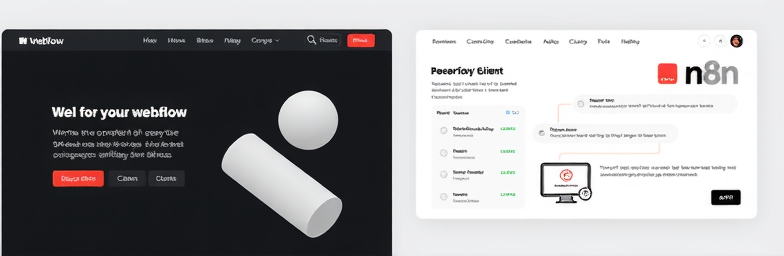
We rebuild in Webflow. We design a clean, modern system and model the CMS to match the business: insights, frameworks, case studies, landing pages, authors, industries, and pain points. Each template has specific CTAs and related content. Pages load fast. Editors love the workflow and ship more often.
Then we wire N8n: form submissions enrich against Clearbit or your CRM, segment by intent, send tailored emails, notify Slack for high-fit leads, and create tasks in your pipeline. We add events so you can see which posts create sales conversations. App sprawl disappears. So does guesswork.
Modern design plus smart automation equals business impact
This is the WeCraft way. Modern design, built in Webflow for speed and editorial control. Smart automation, built in N8n to remove manual work and tighten follow-up. Tangible business impact you can measure.
- Audit and strategy: we map conversion paths and instrument tracking
- Design system: reusable components that keep the brand consistent and agile
- CMS architecture: content relationships that power internal linking and SEO
- Automation: lead enrichment, routing, nurture, and ops workflows that just run
- Dashboards: clarity on what content drives pipeline, not just traffic
When Shopify still makes sense
If you run complex commerce, Shopify is excellent. But if your site is content led and your conversion is a demo, call, or download, using a storefront CMS is costly and restrictive. You do not need duct tape; you need a system.
Closing thought
A great website is not the prettiest one. It is the one that turns attention into action with minimal friction and maximum clarity. If your current setup looks good but feels hard to change, slow to load, and impossible to measure, it is time to replace duct tape with strategy. We can help you do it right, once.
Insights That Sparkle
Stay inspired with fresh ideas, industry tips, and behind-the-scenes stories. Our blog is where we share trends, knowledge, and a touch of creativity to help you grow, glow, and stay ahead.
%20(1).png)

.png)
.png)
.png)
%20(1).png)