

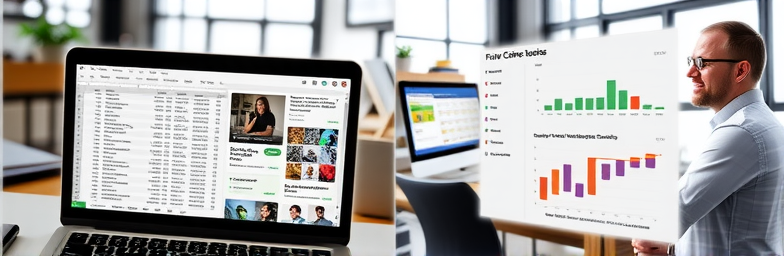
If you're still using spreadsheets as CRM, you're burning money
Founders love clean dashboards, polished branding, and a homepage that looks like a magazine cover. But if your leads land on that beautiful site and then disappear into a spreadsheet, you do not have a growth engine. You have expensive art and manual admin. That gap is where money leaks: slow follow-up, lost context, unqualified calls, and no feedback loop to improve.
A beautiful website that doesn't sell is expensive art
Design matters. It signals quality, reduces friction, and builds trust. But design without conversion systems is a cost center. We routinely audit websites with cinematic hero videos, clever copy, and zero operational backbone. No intent-based CTAs. No calendar to book a call. A contact form that fires an email into a shared inbox. Then a spreadsheet where someone sorts rows every Friday. Meanwhile, your competitor replies in five minutes and gets the deal.
Here is what happens in that setup: visitors arrive, a few fill a generic form, half the entries are junk, the team responds a day later, and follow-ups get forgotten. Traffic is not the problem. Systems are.
Aesthetics vs performance
- Aesthetics say we look good. Performance says we convert, route, and close.
- Aesthetics optimize for opinions. Performance optimizes for metrics: load speed, time to first response, qualified meetings booked, pipeline created.
- Aesthetics focus on pages. Performance focuses on paths: the exact click sequence from ad or search to a booked call.
What actually makes a website convert
- Message clarity: a sharp value proposition above the fold and a primary CTA that matches intent (book a call, get pricing, start an audit).
- Multiple conversion paths: low-friction options for low intent (email capture, resource download) and high-friction options for high intent (schedule now, talk to sales).
- Friction-smart forms: short on first touch, progressive on follow-up. Auto-enrich company data to avoid asking 12 fields. Capture UTM and source so every deal has provenance.
- Instant scheduling: embed a calendar so qualified visitors can book in one step. Offer route-by-interest options (implementation, redesign, automation).
- Lead routing and SLAs: if company size or budget meets threshold, notify the right owner instantly and set a five-minute response target. Everyone else gets a friendly, automated follow-up.
- Automated follow-up: an immediate email and optional SMS confirming the meeting, plus a reminder sequence that reduces no-shows. If no calendar booking, trigger a nudge 30 minutes later.
- Clean data into a real CRM: every submission becomes a contact, company, and deal with tags, owner, and stage. No spreadsheets required.
- Measurement: dashboards that show visit-to-lead, lead-to-meeting, meeting-to-opportunity, and by-source performance. You improve what you can see.
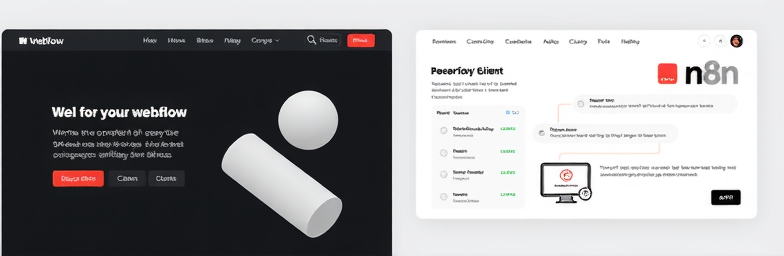
This is where Webflow and n8n shine together: Webflow for speed and conversion-first design; n8n to orchestrate the plumbing — form capture, enrichment, routing, notifications, CRM updates, and analytics syncing.
A quick before/after
Before: a founder-led services company with a gorgeous site and a contact form feeding a Google Sheet. 9,000 monthly visits. 1.1% submit rate. Median reply time 22 hours. Sales spent five hours a week deduping rows. Many good leads went cold.
After WeCraft: rebuilt key pages in Webflow around intent. Added calendar booking, segmented CTAs, and short forms with auto-enrichment. Used n8n to push every lead into the CRM, score by fit, ping the right owner in Slack, create tasks, and send instant confirmations. Result in 90 days: submit rate up to 2.4%, meetings booked up 3x, median reply time under five minutes, five hours of manual admin reclaimed weekly, and a clearer pipeline.
But my spreadsheet is simple and everyone knows it
That simplicity is exactly the issue. Spreadsheets do not enforce process, ownership, timestamps, or SLAs. They do not trigger reminders, dedupe records, or log every touch. They do not show which channel drives revenue. When money is at stake, you need systems that never forget and never sleep.
The WeCraft way
- Audit: we map your traffic sources, pages, forms, data flow, and response times. We quantify the leak.
- Design for performance: Webflow pages built around intent, speed, and proof. Clear CTAs, calendars, and trust where it matters.
- Automate the handoff: n8n connects Webflow to your CRM, enrichment, Slack, and email. Lead scoring, routing, instant follow-up, and clean records by default.
- Measure and iterate: dashboards that tie traffic to revenue, and weekly improvements that compound.
If you are still nursing leads in a spreadsheet, you are not saving time — you are burning pipeline. Pair modern design with smart automation and you will feel it in response times, in calendars filled with the right meetings, and in revenue. That is the work we do at WeCraft Studio: modern design, smart automation, tangible business impact.
Insights That Sparkle
Stay inspired with fresh ideas, industry tips, and behind-the-scenes stories. Our blog is where we share trends, knowledge, and a touch of creativity to help you grow, glow, and stay ahead.
%20(1).png)

.png)
.png)
.png)
%20(1).png)