

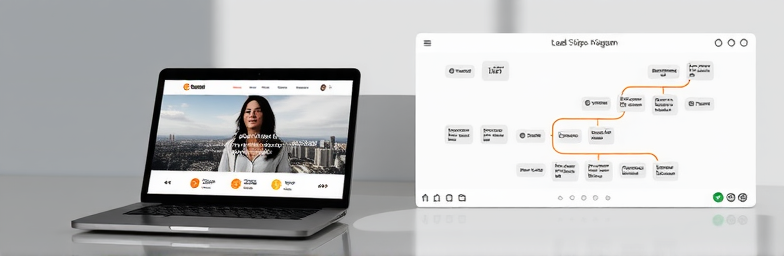
The mistake founders make with automation: automating tasks, not business rules.
You launch the redesign. It looks premium. It loads fast. Your team celebrates. Then the pipeline graph doesn’t move. The problem wasn’t the header font. It was the absence of conversion systems and the wrong idea of automation.
Most teams automate tasks: send a Slack ping when a form submits, drop a contact into a spreadsheet, fire a welcome email. Useful, but shallow. What moves revenue is automating business rules: who qualifies, where they route, what happens next, and how fast.
Why a beautiful website without systems underperforms
Design attracts attention; systems convert it. Without rules behind the interface, your website becomes a brochure—polished, passive, and forgettable. Common failure points:
- Generic CTAs that treat all visitors as equal, regardless of intent.
- Forms that dump into a shared inbox with no SLA, no owner, no prioritization.
- Duplicate leads scattered across tools; nobody knows the truth.
- Slow or inconsistent follow-up because steps live in people’s heads, not in workflows.
The result: missed timing, unqualified sales calls, clogged calendars, and an expensive site that doesn’t pay for itself.
Aesthetics vs performance
Great aesthetics support performance—but they are not a substitute for it. Performance is measurable. It looks like:
- Message clarity: a sharp promise, specific outcomes, and frictionless paths.
- Intent-specific journeys: demo for high intent, price guide for mid intent, newsletter or tool for early intent.
- Speed to lead: response within minutes, not days, with routing that matches lead value.
- Data integrity: one source of truth, deduped and enriched.
- Closed-loop analytics: every click tied to pipeline, not vanity metrics.
Tasks vs business rules (and the impact on revenue)
Tasks are actions: send email, create record, post message. Business rules are decisions: if company size is over 50 employees, route to enterprise AE; if it’s a student, nurture with self-serve content; if it’s a competitor domain, stop. Rules turn activity into outcomes.
Example: A B2B founder gets 200 leads a month. Tasks automation sends a Slack alert and a generic sequence to everyone. Business rules automation in n8n does this instead:
- Dedupes by domain and email, enriches with Clearbit, scores by fit and intent.
- Routes high-score leads to the right AE, creates an opportunity, and triggers a 5-minute SLA timer.
- Books time automatically for inbound requests, with dynamic availability.
- Sends a tailored sequence by segment (enterprise, SMB, partner, student).
- Notifies success if no reply in 10 minutes and reassigns if SLA is breached.
Same form. Same website. But with rules, the team speaks to the right people, faster, with relevant context. That’s pipeline, not noise.
What actually makes a website convert
- A sharp offer: state the transformation, not features. Make the value obvious above the fold.
- Proof that reduces risk: specific case studies, metrics, and named clients.
- Paths by intent: demo, pricing, calculator, comparison page, samples—each with its own CTA and follow-up.
- Friction where it matters: ask qualifying questions that help both sides, not just email and name.
- Fast, respectful follow-up: confirmation, next steps, and a human response within minutes for high intent.
- Event-level tracking: instrument critical moments (viewed pricing, started demo, abandoned form) and act on them.
When these are wired into rules-based automations, two things happen: your calendar fills with the right conversations, and your team stops doing manual triage.
The WeCraft way
At WeCraft Studio, we design for outcomes and implement rules that mirror your business. Our approach:
- Map the rules: qualification, routing, SLAs, and lifecycle stages—written down and agreed.
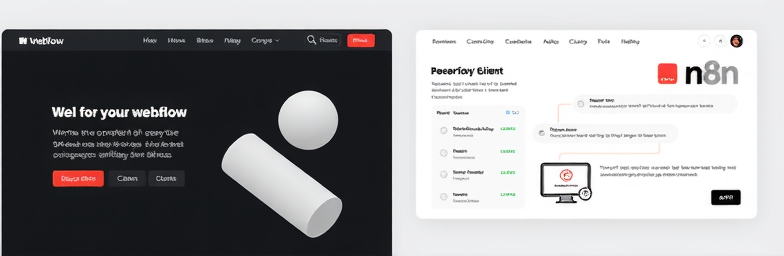
- Design the journeys: modern Webflow experiences built around intent, not aesthetics alone.
- Automate the logic: n8n workflows for enrichment, scoring, dedupe, routing, scheduling, and follow-up.
- Measure what matters: dashboards that tie sessions and clicks to meetings and revenue.
- Iterate fast: test copy, offers, and rules, then keep what moves pipeline.
The outcome is tangible: shorter response times, cleaner data, higher meeting quality, and a site that funds itself.
Bottom line
If you’re planning a redesign, decide the rules first. Automate the decisions, not just the chores. Then build the interface that makes those decisions feel effortless. That’s how modern design and smart automation create real business impact—and it’s the work we do every day.
Insights That Sparkle
Stay inspired with fresh ideas, industry tips, and behind-the-scenes stories. Our blog is where we share trends, knowledge, and a touch of creativity to help you grow, glow, and stay ahead.
%20(1).png)

.png)
.png)
.png)
%20(1).png)