


The hidden cost of patching your old site again.
You can keep tightening bolts on a shaky bridge, but traffic won’t move faster—and one day it buckles. Websites are the same. Patching plugins, tweaking a headline, begging your developer for “one last fix” feels thrifty. In reality, it’s the most expensive way to operate online.
The patch looks cheap. The waste is not.
Founders rarely measure the hidden bill of an aging site. You pay in three places:
- Lost leads: Forms fail silently. CTAs compete. Load times creep from 1.8s to 4.5s and mobile visitors bounce.
- Team time: Sales chases cold, unqualified leads. Marketing babysits broken tracking. Ops manually moves data between tools.
- Opportunity cost: Paid traffic underperforms. Word-of-mouth hits a wall because the site can’t carry the conversation.
The cruel part: these costs don’t show up on an invoice. They show up as a flat pipeline and a tired team.
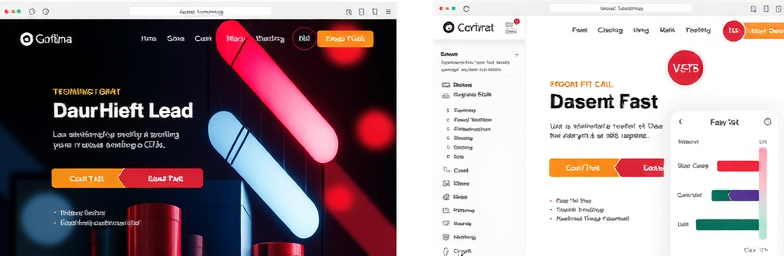
Pretty doesn’t convert. Clarity does.
A beautiful website without conversion architecture is a brochure. It can win an award and still miss payroll. Conversion happens when design, copy, data, and automation work as a system.
Here’s the line between aesthetics and performance:
- Looks good: Big hero image, trendy typography, clever headline.
- Works hard: Clear value prop above the fold, single primary CTA, visible social proof, fast load, and a post-click path that guides each visitor to the next best step.
If your homepage is gorgeous but leaves people asking “So what, why now, how do I start?”, you don’t have a website. You have a poster.
Where conversions actually happen
High-performing sites are intentional about every decision:
- Message hierarchy: The first screen answers who it’s for, what changes for them, and how to start—without scrolling.
- Focused paths: One primary CTA across the site (book a demo, get a quote), with helpful alternates (download, subscribe) for earlier-stage visitors.
- Proof and specificity: Results, metrics, logos, and short case summaries close the trust gap fast.
- Speed and stability: Passing Core Web Vitals on mobile is non‑negotiable. Slow equals “I don’t trust you.”
- Data integrity: Clean analytics, event tracking, and attribution so you know which channel, page, and message creates revenue.
- Automation after the click: Forms enrich data, route to the right owner, book meetings, and trigger follow-up—without human babysitting.
An example: the silent $10k leak
A B2B founder tells us, “We get 6,000 visits a month and 0.6% convert. Can you make it prettier?” At 0.6%, that’s 36 leads. With a modern conversion system, 2.0% is realistic: 120 leads.
Assume 20% become SQLs (24 vs. 7), and 25% of SQLs close. That’s 6 deals vs. 2. If your average first-year deal value is $5,000, you’re leaving ~$20,000 on the table every month. Not because your site isn’t pretty—because it’s not built to convert.
Now add the invisible costs: a broken form for one week, lost UTM data, and manual scheduling back-and-forth. Patches don’t prevent these. Systems do.
What modern actually looks like
At WeCraft Studio, we build for impact, not drama. Modern design + smart automation + tangible business outcomes.
- Discovery, not decoration: We interview sales, audit analytics, and map jobs-to-be-done. Design follows the buying journey.
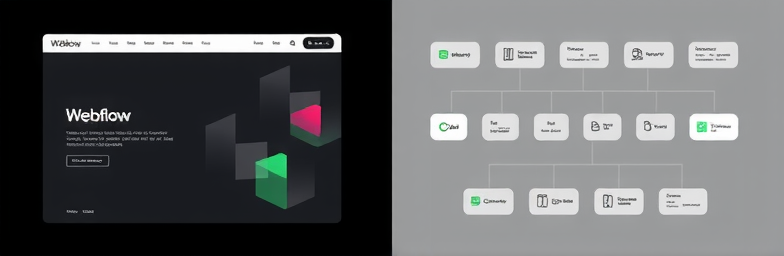
- Conversion architecture: Clear value prop, ruthless CTA focus, proof blocks, objection handling, and purposeful navigation—componentized in Webflow for speed and control.
- Performance by default: Lightweight builds, accessible markup, and Core Web Vitals monitored. Your site should feel instant on 4G.
- Automation with n8n: Form hits CRM with enrichment, lead scoring determines path, Slack alerts the owner, Calendly books in one click, Notion creates a task, and a warm sequence personalizes follow-up. No one chases spreadsheets.
- Measurement and iteration: Event tracking, dashboards, and A/B testing tied to pipeline, not vanity metrics.
Example flow: A prospect downloads a pricing guide. n8n enriches the domain, routes high-fit leads to sales with a same-day prompt, sends a plain-text follow-up from the founder’s inbox, and invites them to a consult. Low-fit leads get nurtured automatically. No form goes into a void.
When should you stop patching?
Three signals:
- Your fixes move pixels, not numbers. If conversion, speed, or qualified demos haven’t improved in 60 days of tinkering, the ceiling is structural.
- Your stack is fragile. If one plugin or theme update can break core pages, you’re paying a stability tax.
- Your team is the automation. If follow-up depends on memory, you’re burning leads and morale.
Stop patching. Build the system.
Patching treats symptoms. Systems compound. A website that looks great and sells clearly, loads fast, measures honestly, and automates the boring parts will out-earn any pretty patchwork.
If you’re ready to replace duct tape with a durable growth engine, that’s the work we do at WeCraft Studio.
Insights That Sparkle
Stay inspired with fresh ideas, industry tips, and behind-the-scenes stories. Our blog is where we share trends, knowledge, and a touch of creativity to help you grow, glow, and stay ahead.
%20(1).png)

.png)
.png)
.png)
%20(1).png)