


N8n vs Zapier and Make: the real choice is ownership.
Founders often come to us post-redesign with the same frustration: the site looks great, traffic is up, but demos and revenue barely move. The problem isn’t the visuals. It’s the missing system behind them. A beautiful site without conversion architecture is just a brochure. Performance is what pays the bills.
Pretty doesn’t convert. Systems do.
Aesthetics earn attention. Systems turn attention into action. Consider a familiar pattern: a crisp hero section, a tidy portfolio, a contact form that goes to a shared inbox. No routing, no enrichment, no follow-up logic, no calendar booking, no service level targets. Leads linger. Response times slip. Prospects go cold.
Now compare that to a performance site: one clear offer, one primary CTA, a form that qualifies by segment, instant calendar scheduling, automated enrichment, smart routing to the right owner, and a triggered sequence if the lead stalls. Sales sees the right context in the CRM, ops sees load, and the founder sees what’s working in a dashboard. Same pixels, different outcome.
What a conversion-ready site actually includes
- Message clarity: a sharp offer, credible proof, a single path to act.
- Speed and stability: fast pages, zero dead ends, zero guesswork.
- Form strategy: short for speed, smart for qualification.
- Calendar-first flow: reduce back-and-forth by booking on submit.
- Routing and SLAs: send to the right owner with time-bound alerts.
- Data enrichment: fill gaps automatically so sales doesn’t chase basics.
- Lifecycle triggers: follow-ups for no-shows, nudges for stalled deals.
- Attribution and reporting: know which channel actually creates pipeline.
At WeCraft Studio, we design Webflow sites for speed and clarity, then connect them to clean automations so the moment a lead appears, your system works for you, not the other way around.
Zapier and Make vs n8n: decide by ownership
When founders ask which tool to use, they usually ask about features. That’s not the real question. The real choice is ownership: who controls your workflows, data, and cost curve over time?
Ownership and data residency. Zapier and Make are excellent hosted platforms. They’re fast to start and low maintenance, but your data flows through their infrastructure. n8n, by contrast, is open-source and can be self-hosted. That means you keep workflows, logs, and payloads inside your environment—important for compliance, sensitive data, and peace of mind.
Cost at scale. Hosted tools price on tasks or operations. That’s perfect for prototypes and low volume. As you scale to tens of thousands of runs a month, per-task pricing compounds. With n8n, your cost is infrastructure and maintenance, which often flattens the curve. At around ~50k runs a month, many teams find self-hosting materially more efficient.
Flexibility and vendor lock-in. Zapier and Make excel at common integrations. When you hit edge cases—custom retries, branching, queues, complex conditionals, code steps, version control—n8n behaves more like an orchestrator you can shape. You’re not locked into a provider’s limits or roadmap.
Reliability and observability. Hosted tools abstract away servers, which is great until you need deeper visibility or control. With n8n, you can add workers, isolate sensitive flows, implement your own logging, and adopt Git-based change management. If uptime and auditability are critical, ownership pays dividends.
Security posture. If you handle PII or contract-bound data, self-hosting reduces data processors in your chain. You can choose region, retention, and access controls. Hosted tools offer strong security, but the question is your risk tolerance—and your clients’.
When Zapier or Make wins. Early-stage teams, small volumes, or non-technical operators often get more momentum with Zapier or Make. We use them when speed beats control, with a plan to migrate high-volume or sensitive workflows to n8n later.
What this looks like in practice
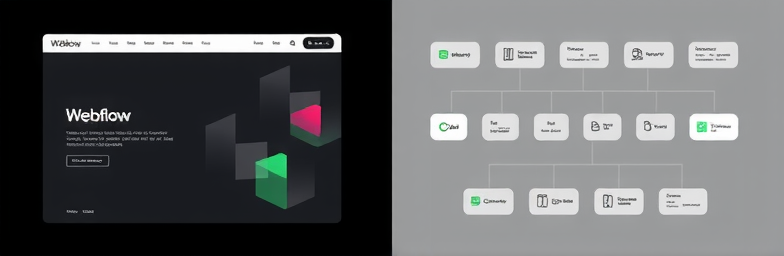
Example: A B2B services firm moves from a “contact us” inbox to a proper flow. Webflow form → enrichment → dedupe → CRM create/update → auto-assign owner by territory → Slack alert with context → calendar booking → fallback sequence if no booking → attribution recorded. On submission, the lead lands where it should, with the details that matter. Response time drops from hours to minutes. Sales meetings increase. No one wonders where leads went.
If they’re testing the market, we might wire this with Make for speed. If they’re scaling, handling sensitive data, or forecasting heavy volume, we’ll build it in n8n on their own infrastructure, with monitoring and version control. Same system design, different level of ownership.
The WeCraft way
We don’t sell websites or automations in isolation. We design outcomes. First we define the conversion architecture—offer, flow, data model, and SLAs. Then we ship a Webflow site that loads fast and speaks clearly. Finally, we implement the right automation layer: Zapier/Make for momentum, n8n for ownership and scale. Documented, observable, and measurable.
If you’re planning a redesign, don’t just buy new paint. Buy the engine. Choose a stack you can own when it matters. We’ll help you decide where speed is enough—and where control is non-negotiable.
Insights That Sparkle
Stay inspired with fresh ideas, industry tips, and behind-the-scenes stories. Our blog is where we share trends, knowledge, and a touch of creativity to help you grow, glow, and stay ahead.
%20(1).png)

.png)
.png)
.png)
%20(1).png)