

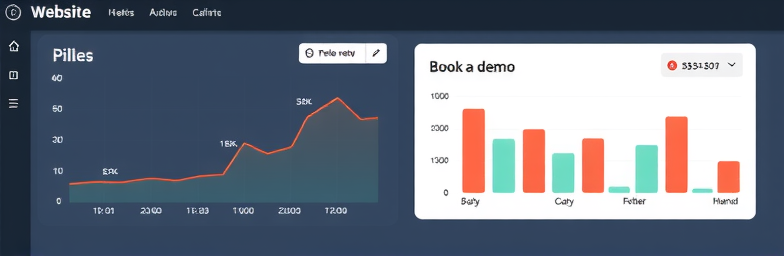
The real difference between traffic growth and revenue growth online
Founders often tell us the same story: the new site looks beautiful, traffic is up, and yet the calendar is quiet and deals move slowly. That gap exists because traffic is attention, not outcome. Revenue happens when your website and your operations behave like a system, not a portfolio piece.
A beautiful site without a system is an expensive brochure
Design matters. But design without a conversion system is decoration. You can pour 10,000 more visitors onto a page that asks for nothing clear and automates nothing useful, and you will still get silence. Common signs you have a brochure, not a growth engine: people compliment the aesthetics, but struggle to understand what you sell; leads arrive as unqualified contact forms that sit in a shared inbox; follow-ups depend on a human remembering.
Revenue grows when the site guides the right visitor to a clear action, qualifies them, and triggers a chain of reliable automations that keep momentum without manual effort.
Aesthetics vs performance
Aesthetics makes people stay; performance makes them act. Performance looks like this: clarity of offer in the first screen; one primary call to action; pages that load fast; proof where doubt arises; friction only where it filters; automated follow-up that never forgets; measurement that shows where to fix the leak.
What makes a website actually convert
There is no secret button, just a coherent system:
1) A focused offer. Name the problem you solve and the outcome you deliver. Ditch vague taglines. The test: could a stranger repeat your value in one sentence after five seconds on your site?
2) One path to action. Give visitors a clear next step based on intent: book a consult, price request, or product demo. Remove competing CTAs.
3) Smart qualification. Use a short form that asks what matters to your sales process (company size, timeline, budget signals). Avoid long interrogations, but collect enough to route intelligently.
4) Instant routing and response. The moment a form is submitted, route to the right owner, drop into the CRM, create a deal, and send a helpful, personalized confirmation. Speed wins; minutes matter.
5) Calendar and reminders. Let qualified leads book directly. Automate reminders and pre-call materials to cut no-shows and shorten the time to value.
6) Proof at the point of doubt. Place case studies, metrics, and logos where the decision happens, not buried on a separate page.
7) Nurture the not-yet. For visitors who are early, provide a light nurture sequence and a reason to return. Every visit should move someone closer to a decision.
8) Instrumentation. Track the journey: visitor to lead, lead to qualified meeting, meeting to proposal, proposal to closed. If you cannot see the leak, you cannot fix it.
Where most sites fail
Typical failure patterns are predictable: a clever hero with no concrete promise; scattered CTAs that split attention; a slow, animation-heavy homepage; forms that dump into email; manual follow-ups; calendar ping-pong; proposals sent days later; no measurement beyond pageviews. None of that is a traffic problem. It is a system problem.
Traffic growth vs revenue growth
Traffic is volume. Revenue is throughput. Volume helps only when each visitor meets a clear path with low friction and automated momentum. We have seen founders spend on ads, SEO, and LinkedIn virality while the pipeline stalls because the site cannot qualify, schedule, or follow up without a person nudging it along.
A recent example: a B2B services firm came to us after a redesign that lifted traffic 68% in three months. Revenue was flat. In six weeks we simplified their offer, rebuilt the hero for clarity, set one primary CTA to book a consult, added a 5-field qualifier, integrated Webflow with their CRM, and used n8n to route leads, trigger instant replies, schedule reminders, and create next steps automatically. With the same traffic, qualified meetings rose 2.3x, no-shows dropped 37%, time-to-first-response fell from five minutes to thirty seconds, and close rate improved 22%.
Measure what matters
Stop grading success by pageviews. Track these instead: visitor-to-lead conversion rate; lead-to-qualified meeting rate; time-to-first-response; no-show rate; proposal turnaround time; pipeline velocity; LTV to CAC. These are operational metrics your website can and should influence when it is wired correctly.
The WeCraft way
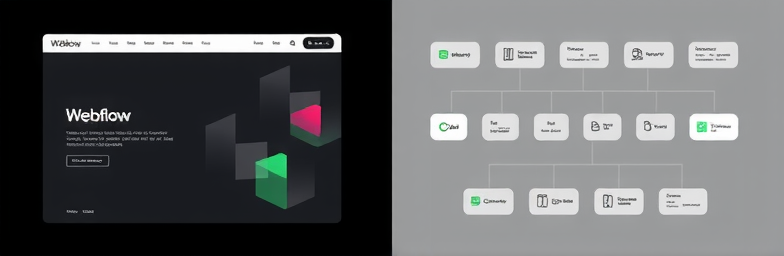
At WeCraft Studio, we build two things in tandem: modern, fast Webflow front-ends that make the right promise, and n8n-powered automations that carry that promise through your funnel and ops. We map your conversion path, design for clarity and speed, connect forms to CRM and calendar, automate reminders and tasks, and instrument the whole journey so you can see, and improve, what actually drives revenue.
You do not need more eyes. You need a system that turns the right eyes into revenue. If your site looks great but your pipeline does not, it is time to fix the system, not buy more traffic.
Insights That Sparkle
Stay inspired with fresh ideas, industry tips, and behind-the-scenes stories. Our blog is where we share trends, knowledge, and a touch of creativity to help you grow, glow, and stay ahead.
%20(1).png)

.png)
.png)
.png)
%20(1).png)