

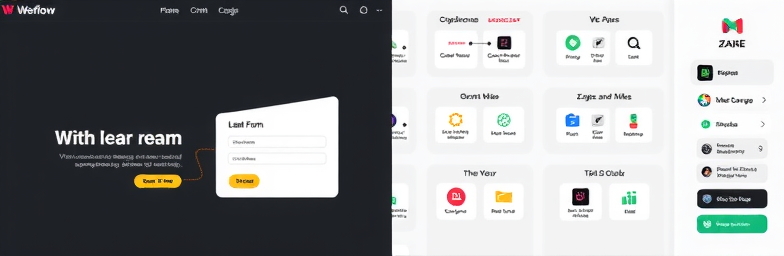
N8n vs Zapier vs Make: the real difference for scaling ops.
A stunning website with no conversion system is an expensive brochure. It looks great, but your pipeline stays quiet, your team keeps copying data by hand, and leads slip through the cracks. If design is the showroom, automation is the engine. You need both to move.
At WeCraft Studio, we design high performing Webflow sites and wire them to smart automation so every click can become a customer. This is where the debate begins: n8n vs Zapier vs Make. The tools are not interchangeable, and your choice affects cost, speed, reliability, and what is possible as you scale.
Aesthetics vs performance
A beautiful site matters, but performance wins revenue. Performance means clear messaging, fast load times, accessible forms, and a frictionless path from interest to action. On the back end, it means your form submissions hit your CRM instantly, leads are enriched and routed to the right owner, follow ups go out within minutes, and your team sees what matters without digging.
Without that system, founders see the usual pain: traffic rises, demos do not; marketing spends more, sales chases ghosts; ops drowns in repetitive tasks. The fix is not another redesign. It is a design that is wired for outcomes.
The conversion system your website actually needs
- Lead capture that never drops data and validates inputs in real time.
- Immediate enrichment and qualification using firmographic signals and UTM context.
- Routing to CRM or pipeline with ownership rules, deduping, and alerts in Slack or email.
- Automated but human follow up sequences that trigger tasks, not spam.
- Attribution and dashboards so you can double down on what works.
This is where automation tools enter. Here is how n8n, Zapier, and Make differ when the stakes are scale, not tinkering.
N8n vs Zapier vs Make — what changes at scale
Zapier: fastest to start, priciest to scale
Zapier shines for simple, linear workflows and a massive app ecosystem. If you need Webflow form to HubSpot to Slack running today, Zapier is painless. But pricing is per task and can climb fast once you add branching, filters, and multi step logic. Complex arrays and bulk operations are awkward. You get speed to first value, but you pay a premium as volume and complexity grow.
Make: visual power for multi branch workflows
Make offers a visual canvas that handles routers, iterators, and arrays elegantly. It is excellent for processing lists, files, and multi system logic at a lower cost per operation than Zapier. Error handling and scheduling are flexible. The tradeoff is that scenarios can get messy without discipline, and some connectors require careful configuration. For teams that want power without self hosting, Make is a sweet spot.
n8n: open, customizable, built for ownership
n8n is open source and can be self hosted, which means data control, custom nodes, and the ability to version your automations alongside your code. It excels when you need complex logic, privacy, or high volume at predictable cost. It does require engineering and DevOps attention for hosting, scaling, and monitoring. If you treat automation like core infrastructure, n8n gives you the levers.
What this looks like in practice
Example: a founder rebuilds their site in Webflow. The new form triggers an automation that enriches the lead, scores it, dedupes against the CRM, assigns the right owner, creates a task if score exceeds a threshold, and pings Slack with context. A warm email goes out within 2 minutes, personalized to the plan mentioned on the page. If the lead is not a fit, it routes to a nurture list with a lighter touch.
On Zapier this is quick to launch but the monthly bill grows with each branch and filter. On Make it is cost efficient and easy to visualize, especially when iterating through arrays or files. On n8n you own the stack and can push advanced logic and custom modules while keeping cloud costs predictable.
Cost and control, simply put
- Velocity now, small scale: Zapier gets you there fast with minimal setup.
- Complexity without DevOps: Make balances power and price for multi branch flows.
- High volume, privacy, and extensibility: n8n wins when automation becomes core ops.
Numbers vary, but a team running six flows and 100k monthly operations might see Zapier pricing jump tiers quickly, Make stay efficient, and n8n costs mainly reflect hosting plus build time. The real cost, though, is downtime and missed leads. Reliability, retries, dead letter queues, and monitoring matter more than a headline price.
The WeCraft way
We build the system around your goals, not our favorite tool. Our approach:
- Audit: clarify messaging, map the buyer journey, find the operational leaks.
- Design: build a Webflow site that loads fast, explains value, and guides action.
- Automate: choose n8n, Zapier, or Make per use case and volume, not dogma.
- Instrument: set up error handling, logging, and alerts so nothing silently fails.
- Train: document playbooks so your team can own day 2 operations.
Result we see often: response times drop from hours to minutes, qualified demos increase without extra ad spend, and ops saves dozens of hours a month. One client went from manual CSV uploads to a fully automated pipeline with enrichment and routing that cut time to first touch by 80 percent and surfaced the right accounts to sales every morning.
Bottom line
A great website is the start. A conversion system is the win. Choose tools based on scale, complexity, and ownership. If you want a modern Webflow site wired to automation that actually moves revenue, WeCraft Studio builds both the showroom and the engine.
Insights That Sparkle
Stay inspired with fresh ideas, industry tips, and behind-the-scenes stories. Our blog is where we share trends, knowledge, and a touch of creativity to help you grow, glow, and stay ahead.
%20(1).png)

.png)
.png)
.png)
%20(1).png)