

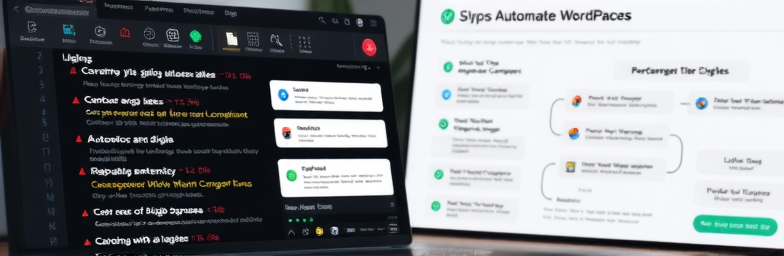
What nobody tells you about patching WordPress: endless hidden maintenance tax
You ship a beautiful WordPress site. The homepage looks sharp, the brand feels elevated, and for a week you are proud. Then the treadmill starts. Plugin updates, theme patches, minor version bumps, caching layers, security alerts. A small red badge in the dashboard becomes a blinking to-do list only you can see. And while you maintain, you are not selling.
The tax you do not see on the invoice
WordPress itself seems free. The real cost hides in the upkeep and fragility around it. Founders tell us the same story: a Friday update breaks the form, Monday brings a quiet inbox, and a week later they realise the site was not collecting leads at all. Here is what that tax looks like in practice:
- Time cost. Even 2 hours a week at a 200 per hour founder rate is more than 20k a year. That is before emergencies.
- Risk cost. One plugin conflict can tank page speed, form delivery, or tracking. You pay with lost leads, not just minutes.
- Tool creep. SEO plugin plus caching plugin plus security plugin plus forms plus page builder. Each adds settings, updates, and failure modes.
- Agility drag. Simple changes become tickets. You hesitate to improve because you fear breaking something.
None of this shows up on a proposal. It shows up in your calendar and your pipeline.
Pretty does not equal performing
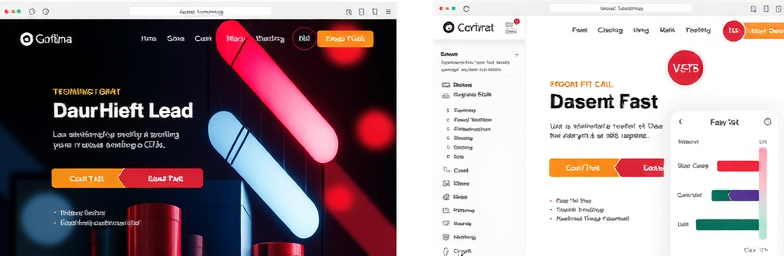
Plenty of sites look great and quietly underperform. Common pattern: oversized hero, vague headline, one generic contact link, slow first load, and no clear path for different buyer intents. It photographs well. It does not convert.
Design is not the problem. Design without a conversion system is. A system means every pixel has a job and every click advances the conversation. That is the gap between aesthetics and performance.
What actually makes a website convert
Across hundreds of reviews, the winners share the same fundamentals:
- Clarity above the fold. One sentence that names the problem and the outcome. One primary action, not three.
- Speed. Sub 2 second first load on mobile. No heavy themes or stacks of scripts fighting each other.
- Obvious next steps for different intents. Book a consult, see pricing guidance, or view proof. Each path is visible without scrolling.
- Social proof close to the CTA. Logos, outcomes, and numbers where the decision happens.
- Frictionless forms and scheduling. Short form, instant calendar, no broken captchas, no spam floods.
- Instrumentation. Events and funnels you can trust. UTM capture, source attribution, and page level insights.
- Automation behind the click. New inquiries go to the right owner, enrich with context, alert the team, create tasks, and trigger follow up without manual work.
Here is a simple blueprint we implement often. Above the fold: value prop and a primary CTA to book a consult. Mid page: three proof points with outcomes. Below that: service snapshots with who it is for, what it delivers, and indicative timelines. Sidebar or sticky header with the same primary CTA. Every form routes to CRM, tags by intent, posts to Slack, and starts a short email sequence. The site is not just a brochure. It is a working funnel.
Why the maintenance treadmill hurts conversions
When you are busy patching, you are not testing headlines, improving offers, or tightening the funnel. Worse, the stack itself creates conversion risk. The form plugin gets an update and toggles a default. Caching masks the error. Analytics shows traffic but no leads, and you do not know if it is demand or a bug. That uncertainty is expensive.
The WeCraft way: modern site, zero patching drama, built for outcomes
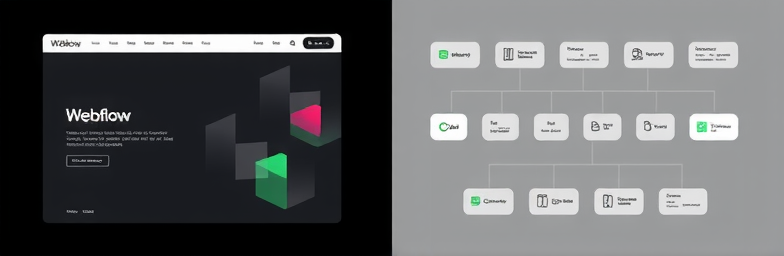
We build marketing sites in Webflow for a reason. It removes the plugin patch cycle, handles hosting and security, and ships clean front end performance. You get design freedom without duct taping five tools together. SEO basics are straightforward. Redirects, meta data, and sitemaps are native. When custom logic is needed, we add it deliberately, not by installing a catch all plugin that drags speed.
Then we wire the business layer with n8n. New leads are validated, routed by territory or service line, scored on fit, and posted to the right channel. CRM records are created, duplicates are merged, and follow ups start instantly. You wake up to qualified conversations instead of mystery form submissions.
Will WordPress ever be the right call
Yes, for certain editorial heavy use cases or when a specific plugin ecosystem is non negotiable. But for most founder led firms with a marketing site and a pipeline target, the simplest reliable stack wins. Less patching. More shipping. More learning. Better conversion.
Bottom line
If your week includes checking for updates, clearing caches, and praying the form still works, you are paying the hidden maintenance tax. A beautiful site without a conversion system is expensive art. Move to a stack that stays out of your way, and put your energy where it pays back: clarity, speed, proof, and automation. That is how we work at WeCraft Studio. Modern design, smart automation, and a site that earns its keep.
Insights That Sparkle
Stay inspired with fresh ideas, industry tips, and behind-the-scenes stories. Our blog is where we share trends, knowledge, and a touch of creativity to help you grow, glow, and stay ahead.
%20(1).png)

.png)
.png)
.png)
%20(1).png)