


Redesign or keep patching? The compounding cost of band-aid websites.
Your site looks fine. The brand feels modern. Yet sales says leads are thin, marketing says ads are working, and your analytics say traffic is up. If the numbers look healthy but the pipeline doesn't, you don't have a design problem. You have a conversion system problem.
Pretty isn't performing
Beautiful interfaces without clear decision paths are expensive brochures. They collect compliments, not customers. A homepage can win awards and still fail if it doesn't do three things fast: clarify the value, qualify the visitor, and route them into the right next step.
Common symptoms we see:
- Multiple CTAs with no hierarchy. Visitors hesitate, then bounce.
- Forms that ask for too much, too early. Qualified people abandon.
- Generic messaging that hides the core value. Time-to-clarity is slow.
- Nice animations, heavy scripts, slow load. Great first impression wasted by lag.
When your site looks better than it works, your acquisition math quietly breaks. You pay for traffic. You earn a fraction back.
The compounding cost of patches
Patching is seductive: a popup here, a plugin there, a script you found in a Slack thread. Each one seems harmless. Together, they create friction that compounds month after month.
- Speed tax: Every extra second of load time can drop conversions by 10–20%. Add a chat widget, an A/B tool, a heatmap, and you're suddenly 3s slower on mobile.
- Brand erosion: Inconsistent components, ad hoc pages, and mismatched CTAs confuse trust. Trust lost is conversion lost.
- Ops drag: Manually routing form fills to the right rep, deduping contacts, fixing tracking—your team becomes the middleware.
- Attribution fog: Stitched-together tools break UTM and event tracking. You can't see what's working, so you scale the wrong things.
- Feature debt: Each quick fix creates edge cases that slow every future change. Shipping a simple landing page becomes a sprint.
Patching gives the illusion of speed while quietly taxing growth. The bill shows up as wasted ad spend, long sales cycles, and missed quarters.
What a converting website actually does
High-performing sites are designed around decisions, not decorations. They combine clear story, guided paths, and connected systems.
- Message hierarchy: A headline that quantifies value, subcopy that frames the problem, and proof that lowers risk (logos, outcomes, case stats).
- Single primary path: One dominant CTA matched to intent (\"Book a 15-min fit call\" for sales-led, \"Try the live demo\" for product-led). Secondary options exist, but they never compete.
- Segmented flows: Role or use-case toggles change examples, pricing framing, and proof in-line. Visitors see themselves immediately.
- Fast and focused: Sub-2s LCP on mobile. Minimal scripts. Visuals that earn their weight.
- Capture with context: Multi-step forms that feel light, qualify gently, and set expectations for what happens next.
- Automation after the click: Form → CRM with dedupe and scoring, instant Slack alerts to the right owner, calendar booking, and a nurture that adapts to behavior.
- Measurable: Events mapped to a single source of truth. You can answer \"What changed conversion last week?\" in one screen.
A quick example: from brochure to pipeline
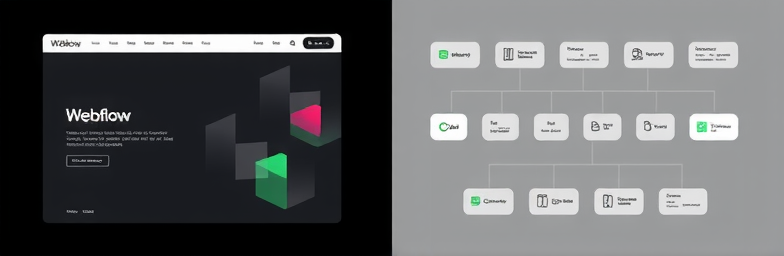
A B2B SaaS founder came to us with a polished site and a 0.6% demo conversion rate. We rebuilt the decision path in Webflow and connected the flow with n8n:
- Rewrote the hero to quantify value and added a comparison table for the top \"do-nothing\" alternative.
- Simplified the nav and removed competing CTAs. The primary action became \"Book a 15-min fit call\" with embedded calendar above the fold for returning visitors.
- Introduced a two-step form: email first (low friction), then 3 qualifying questions.
- n8n workflow: deduped leads, enriched company data, routed by territory, alerted the owner in Slack with context, and sent a personalized pre-call brief to the prospect.
Same traffic. Conversion moved to 2.4% in 30 days. Sales cycles shortened because prospects arrived informed and qualified. No hacks. Just design serving a system.
The WeCraft way
WeCraft Studio builds better systems—online and operationally.
- Design for decisions: Webflow sites that load fast, tell a clear story, and guide action.
- Systems over scripts: Natively structured components and analytics, not a patchwork of widgets.
- Automation as leverage: n8n flows that take the manual work out of routing, enrichment, and follow-up.
- Measure, learn, iterate: Conversion events mapped end-to-end so you can invest with confidence.
If you're adding one more band-aid to keep things moving, you're paying a quiet tax on every visit. A focused redesign isn't about vanity; it's about compounding the right way—turning traffic into pipeline and clicks into clarity.
When you're ready to trade patches for performance, build it the WeCraft way.
Insights That Sparkle
Stay inspired with fresh ideas, industry tips, and behind-the-scenes stories. Our blog is where we share trends, knowledge, and a touch of creativity to help you grow, glow, and stay ahead.
%20(1).png)

.png)
.png)
.png)
%20(1).png)