

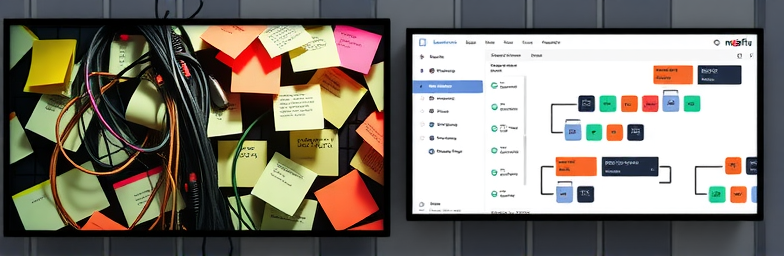
Redesign vs tweaks: starting over often costs less than limping along.
Most founders do not have a website problem. They have a conversion system problem hiding inside a pretty layout. You keep paying for tweaks — a new hero, a brighter button, another plugin — but pipeline does not budge. The issue is not color; it is structure. When the system is wrong, tinkering is just polishing the brakes on a car with no engine.
Pretty vs performant
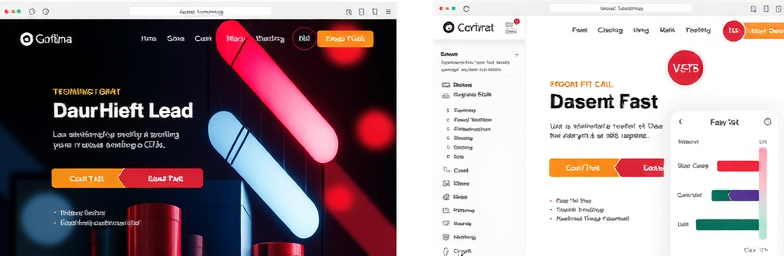
Aesthetics get attention. Performance gets revenue. A high converting site does five things relentlessly:
- States a clear promise and who it is for, above the fold.
- Creates focused paths by intent — explore, compare, act — with zero dead ends.
- Shows proof of outcomes, not adjectives: metrics, before or after, specific clients.
- Loads fast and reads clean on mobile. Sub 2 seconds is the bar, not the dream.
- Captures demand and routes it instantly into operations — CRM, qualification, calendar, follow up.
That last one is where most beautiful sites fail. If your form drops leads into an inbox, if no one gets an instant alert, if a prospect cannot book time without back and forth, you do not have a website. You have a brochure.
The real cost of endless tweaks
Here is a common storyline. A services firm spends 6 months on micro changes: swap fonts, rewrite headlines, add a chatbot, install three new plugins. Cost: around 12k in freelance hours and subscriptions. Result: traffic flat, conversion rate inching from 0.6 percent to 0.8 percent, ops still manual. Meanwhile, marketing is guessing because analytics events are broken and pages are inconsistent.
We rebuilt the same footprint in Webflow with a component system and an automation layer in n8n. Timeline: 6 weeks. Cost: the same founder would have spent across 9 to 12 months of tweaking. Outcome: conversion rate to qualified call at 2.4 percent, lead response time under 2 minutes via Slack alerts, automated enrichment, instant calendar booking, and a clean dashboard of where deals come from. Maintenance dropped to minutes, not days.
Tweaks feel cheaper because they are smaller. They are not. They compound into tech debt, subscription creep, and coordination drag. Redesigns, done right, compress that drag into one deliberate build and replace chaos with a system.
What a conversion system actually includes
- Positioning you can read in 5 seconds. Who you help, the business outcome, and the proof you can back it up.
- Pages with a single job: educate, compare, or convert. No Frankenstein layouts, no five CTAs fighting for attention.
- Offer design that bridges interest to action: starter audits, calculators, pricing guidance, case libraries.
- Measurement baked in: events for scroll, CTA clicks, form completion, calendar bookings, and post sale actions.
- Automation that closes the leaks: n8n flows to enrich leads, score by fit, notify the right owner, create a CRM deal, drop a Slack thread, send a warm follow up, and spin up a Notion brief before the call even starts.
When this exists, you stop relying on hero copy mood swings to create pipeline. The system carries the weight.
Why tweaks often cannot win
- Legacy CMS makes simple edits hard, so you keep stacking plugins and breaking speed.
- Design sprawl: every page looks like a one off, so pattern changes require custom dev every time.
- No single source of truth: analytics, forms, and CRM are misaligned, so you build in the dark.
- Brand and offer have evolved, but the site language has not. You are asking 2026 buyers to read 2022 thinking.
At some point, the cheapest path is to stop negotiating with the past. Replace it.
When a rebuild is the rational move
- Visitors cannot tell what you do in 10 seconds.
- Mobile CLS is a mess and pages take 3 plus seconds to load.
- Teams avoid publishing because the CMS is fragile.
- Leads require manual triage and handoffs slip through cracks.
- Attribution is unreliable and you cannot trust your dashboard.
The WeCraft way
We design high performing Webflow sites and wire them to your operations with n8n. Modern design plus smart automation plus tangible business impact.
- Discovery that turns your scattered story into a crisp, defensible promise.
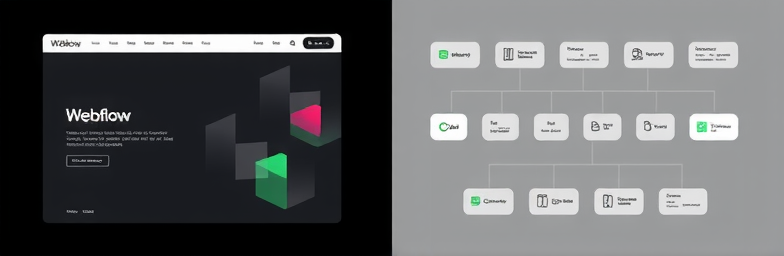
- System architecture: page maps, component library, and conversion paths before pixels.
- Webflow build: fast, accessible, maintainable. Motion used with purpose, not as decoration.
- Automation: n8n flows for routing, enrichment, Slack alerts, calendar booking, CRM creation, and post call follow up.
- Measurement: event tracking and dashboards that sales and marketing both trust.
The business impact is simple: fewer steps, faster speed to lead, cleaner data, and a site that your team can actually update. Most importantly, it converts because it is built as a system, not a collage.
If you are weighing another round of tweaks against a reset, ask what the next 6 months of delay will cost in lost pipeline and team time. Then build the system once, the right way. We would be glad to show the side by side — cost of limping along vs a focused rebuild — and deliver the version that pays for itself.
Insights That Sparkle
Stay inspired with fresh ideas, industry tips, and behind-the-scenes stories. Our blog is where we share trends, knowledge, and a touch of creativity to help you grow, glow, and stay ahead.
%20(1).png)

.png)
.png)
.png)
%20(1).png)