

Shopify is for stores; service businesses need Webflow, period
If you sell products, Shopify is a rocket. If you sell expertise, it’s the wrong vehicle. Service businesses don’t need a cart; they need clarity, trust, and a frictionless path to conversation. That’s why Webflow wins — especially when it’s wired to smart automations.
A pretty site without a system is an expensive billboard
Founders tell us the same story: “We redesigned. It looks great. Leads? Flat.” Aesthetics aren’t the problem. The missing piece is the conversion system — how a visitor moves from mild interest to a booked call and a signed proposal.
A high-performing service website does the following:
- Positions the problem and your point of view in the first 5 seconds
- Uses proof (specific outcomes, case studies, logos) to build trust
- Offers clear next steps for different intent levels: Book a call, see pricing guidance, download a checklist
- Qualifies quietly with a multi-step form that feels light, not interrogational
- Routes leads to the right person fast and follows up automatically
- Surfaces real metrics so you can improve, not guess
Design matters. But design without these mechanics is decoration. Performance is design that moves the business.
Shopify is brilliant for carts, not conversations
Shopify’s mental model is SKU → cart → checkout. That’s perfect for products. For services, it’s awkward. No one wants to “Add to cart” a discovery call. You end up bolting on apps, faking product pages as services, and fighting a system designed for inventory, not inquiry.
Typical friction we see when services live on Shopify:
- Templates push you toward product thinking and away from narrative, proof, and process
- Lead capture is secondary; the platform optimizes for transactions, not qualification or booking
- Content models for case studies, service areas, and resources are rigid or app-dependent
- Automations revolve around orders and fulfillment, not proposals, meetings, or onboarding
It’s not that you can’t make it work. It’s that you’re swimming upstream.
What a conversion-ready service site looks like (in Webflow)
Webflow gives you design freedom and clean performance without fighting the platform. More importantly, it lets us architect the buyer’s journey end-to-end.
- Above the fold: a sharp outcome-driven headline and two CTAs — primary “Book a consultation,” secondary “See pricing guide.”
- Services at a glance: what you do, who it’s for, and why it beats the status quo.
- Proof engine: CMS-powered case studies with results, process, and assets. No PDFs. All searchable, linkable, crawlable.
- Clear pricing anchors: ranges or “starting at” to self-qualify without scaring off the right buyers.
- Conversion patterns: a lightweight multi-step form that gathers context and then drops straight into a calendar — no back-and-forth.
- Content system: resources, FAQs, and playbooks that show expertise and rank for intent-rich searches.
- Speed and SEO: semantic HTML, clean CSS, control over meta, schema, and redirects without a dev ticket.
You get the polish of a premium brand with the mechanics of a growth engine.
Automation is the difference between interest and revenue
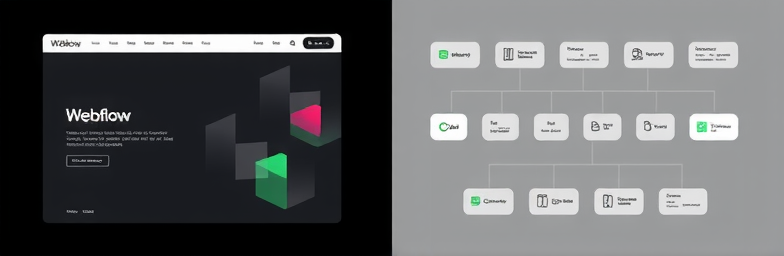
Speed-to-lead and organized follow-up close deals. This is where automation with n8n compounds returns. A typical WeCraft workflow looks like this:
- Form submitted → enrich the lead (company size, tech stack) → score fit
- Instantly route: enterprise to founder, SMB to AE; create a CRM record and Slack alert with context
- Auto-schedule via calendar; send a tailored prep email based on selected service
- Generate a proposal draft from a template with the collected inputs
- If no booking in 24 hours, send a personal-feeling nudge; if no reply post-call, trigger a follow-up sequence
The outcome: responses in minutes, not days; fewer dropped balls; proposals out while intent is high. Teams get back hours each week, and close rates lift because the process feels professional from the first click.
A quick example
A B2B services firm came to us on a Shopify theme with “services” as products and a generic contact page. We moved them to Webflow, rebuilt messaging and proof, added a multi-step qualifier, and automated routing and scheduling with n8n. Within 60 days, demo bookings increased, average response time fell under 10 minutes, and proposal turnaround dropped from days to same-day. Nothing magical — just the right platform and a real system.
The WeCraft way
WeCraft Studio builds modern Webflow sites that convert, then wires them to automations that save time and reduce manual work. The playbook is simple: diagnose the journey, design for clarity and proof, implement conversion mechanics, and automate the busywork so your team can sell and serve.
If you’re a founder running a service business, stop bending Shopify into something it isn’t. Build a Webflow site that tells your story, qualifies the right leads, books meetings, and triggers the processes that move revenue — automatically.
Insights That Sparkle
Stay inspired with fresh ideas, industry tips, and behind-the-scenes stories. Our blog is where we share trends, knowledge, and a touch of creativity to help you grow, glow, and stay ahead.
%20(1).png)

.png)
.png)
.png)
%20(1).png)