

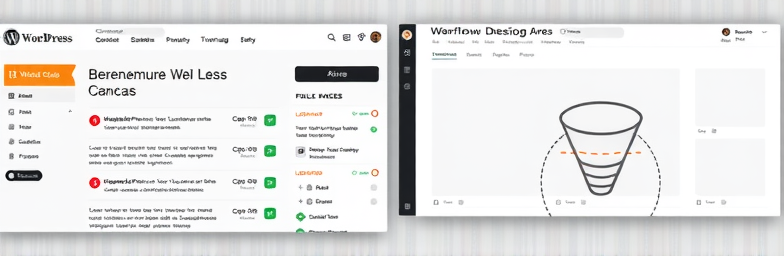
Why Webflow Beats WordPress for Real Businesses (and Nobody Admits It)
Most founders come to us with the same story: “We paid for a beautiful website, but leads are flat and the team hates touching it.” What they actually bought was a canvas, not a system. A site can look premium and still fail to educate, qualify, and convert. Real businesses need outcomes, not themes.
A pretty site that can’t sell is expensive art
High-performing websites do three things well: communicate value fast, remove friction, and route interest to the right next step. That’s it. When those three break, it’s usually because the stack is held together with plugins and assumptions.
Common WordPress reality: five cache plugins disagreeing, a form plugin sending “maybe” leads to someone’s inbox (and spam), a slow theme builder, and a dev who says “don’t update anything” because an update might break the homepage. That fragility kills conversion velocity.
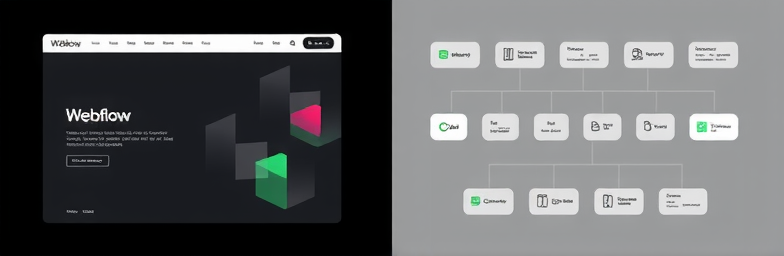
In Webflow, the surface and the structure are one. Pages ship fast on a global CDN, forms are clean, and interactions don’t depend on a chain of third-party scripts. Pair it with automation and you have a system: a prospect fills a form, n8n enriches the lead, scores it, pushes to your CRM, pings Slack, books a call, and writes a note to Notion for ops. No human babysitting. No plugin roulette.
Webflow vs WordPress in the real world
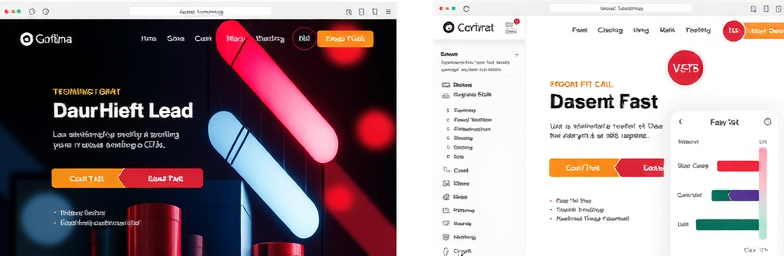
Speed and stability: Webflow’s hosting and code output make Core Web Vitals easier to hit. No PHP, no plugin bloat, less maintenance overhead. We routinely see teams move from multi-second mobile loads to sub-3s just by shedding theme builders and scripts.
Editing without fear: Marketers can change copy, swap images, and publish new pages in Webflow’s Editor without stepping over shortcodes, widgets, and brittle layouts. Governance is clear: roles, staged changes, and a component library that keeps brand consistent.
Design velocity: With Webflow, atomic components and global styles mean your brand system isn’t theoretical — it’s enforced. That shortens the loop from Figma to live, and protects the design from “one-off” pages that dilute trust.
Security and maintenance: WordPress is flexible, but that flexibility shifts risk onto you: updates, patching, server hardening, plugin compatibility. Webflow removes an entire class of problems so your team can focus on content and conversion, not ops.
Yes, WordPress can do anything with enough engineering. The question is: do you want a marketing site that needs an engineer to breathe? Most businesses don’t.
What actually makes a website convert
It’s not a parallax hero. It’s clarity plus momentum:
- Positioning above the fold: who you are, the pain you solve, and exactly who it’s for in 2–3 lines.
- Proof where it matters: quantified outcomes, logos, and specific case snapshots near key CTAs.
- Focused journeys: role-based nav (Founder, Ops, Marketing) with tailored pages and next steps.
- Fast pages: under 3s on mobile, minimal JS, compressed media, no render-blocking scripts.
- Forms that qualify: 4–6 fields that segment lead type and intent, with smart defaults.
- Follow-through: every form posts to CRM, kicks an SLA alert, and triggers a nurture sequence automatically.
Example: A B2B services firm came in with a slow WordPress theme, 12 active plugins, and an 8s mobile load. Leads dripped into a shared inbox and died there. We rebuilt in Webflow, consolidated scripts, and wired n8n to enrich company data, route high-intent leads to sales with a calendar link, and push low-intent leads into a light nurture. The site didn’t just look cleaner — it finally worked.
The WeCraft way
WeCraft Studio builds better systems — online and operationally. Our approach:
- Audit and diagnose: speed, structure, messaging, analytics, and lead flow mapping. We cut noise ruthlessly.
- Design for outcomes: component-driven Webflow builds that load fast, scale easily, and keep brand tight.
- Automate the pipeline: n8n workflows to enrich leads, score, route, notify, and log — zero manual copy/paste.
- Measure what matters: dashboards for speed, conversion, and pipeline health so decisions aren’t guesswork.
The result is a modern website that sells and an ops layer that keeps selling after your team logs off. Modern design + Smart automation + Tangible business impact.
When WordPress still makes sense
If you’re running a content empire with deep editorial tooling, a custom membership ecosystem, or legacy plugins you truly rely on, WordPress can still be right. For most founder-led companies with a marketing site, case studies, and inbound capture, Webflow wins on speed to value and total cost of ownership.
Bottom line
Your site shouldn’t need babysitting to perform. If you’re tired of plugin drama, update anxiety, and leads slipping through the cracks, it’s time to move. WeCraft Studio rebuilds in Webflow, wires the automations, and leaves you with a system you can run — not a theme you fear. Ready for a website that converts on purpose?
Insights That Sparkle
Stay inspired with fresh ideas, industry tips, and behind-the-scenes stories. Our blog is where we share trends, knowledge, and a touch of creativity to help you grow, glow, and stay ahead.
%20(1).png)

.png)
.png)
.png)
%20(1).png)