


Your quick-fix WordPress plugins are why nothing scales or sticks
You installed the form plugin everyone recommends. Then a cache plugin to speed things up. Then a pop-up plug-in because conversions. Then a security add-on because the last plugin broke something. The site looks great, traffic is flowing, and yet demos are flat and ops is chasing ghosts. This is not a marketing problem. It is a systems problem.
Aesthetic without architecture
Founders often treat the website like a brochure that needs to look current. But a modern site is a revenue system. A pretty interface without a conversion architecture is packaging without logistics. It may impress, but it does not deliver.
Conversion architecture means three things working together: clear messaging that speaks to pains and outcomes, frictionless paths to action for every intent level, and instrumentation that shows where money leaks. If any of those are missing, design becomes decoration.
What quick-fix plugins really cost
- Speed drag that compounds: Plugin stacks inject render‑blocking scripts, extra queries, and layout shifts. Going from 0.9s to 2.5s LCP can quietly shave 20 to 40 percent off conversions on paid traffic.
- Fragile updates: One routine update collides with another plugin and your forms stop sending. The team finds out a week later when a prospect complains on LinkedIn.
- Data silos and missing attribution: Form submissions live in a plugin table. UTM parameters get lost. Someone exports CSVs into a CRM on Fridays. Leads go stale by Monday.
- Security and compliance risk: Abandoned plugins become attack vectors. Cookie banners do not actually block scripts. Legal risk aside, trust erodes when alerts and warnings start popping up.
- Team friction: Marketing cannot ship experiments because changes require testing 18 interdependent plugins. Engineering becomes the help desk. Momentum dies.
The invoice for quick fixes is paid in lost revenue, wasted ad spend, and weekends spent patching instead of growing.
What a converting website actually needs
- Message hierarchy: Explicitly map pains to outcomes and objections to proof. Every primary page should answer who it is for, what changes after they buy, and how to start now.
- Intent‑based structure: Clear next steps for cold, warm, and hot visitors. Think learn paths for researchers, comparison paths for evaluators, and zero‑friction actions for buyers.
- Performance‑first build: Lean components, minimal third‑party scripts, and a performance budget you do not exceed. Webflow lets us ship clean, maintainable front ends without plugin bloat.
- Single source of truth for leads: One form system, one webhook. Every submission goes through an automation layer that enriches, routes, and logs consistently.
- Attribution and analytics that stick: Preserve UTMs end to end. Track meaningful events. See funnel health in one dashboard, not five tabs.
- Automation around the sale: Fast follow‑ups, ownership rules, SLAs, and alerts so no lead languishes in an inbox.
A quick example
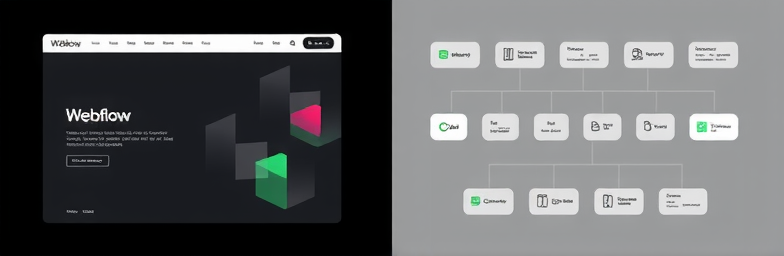
A B2B SaaS founder came to us with a handsome WordPress theme and 22 active plugins. Four different form tools, a 3 plus second LCP on mobile, and demo requests dropping. We rebuilt the front end in Webflow, consolidated content into a structured CMS, and replaced the plugin maze with one form system piping into n8n. There, leads were enriched, deduped, scored, and routed to the right owner in the CRM. UTMs were preserved, Slack alerts fired if no contact happened in 15 minutes, and weekly reports closed the loop.
Result: LCP down to 0.9s, 38 percent lift in qualified demo requests in 60 days, and roughly 8 hours a week saved from manual exports and chasing stale leads. Same budget. Better system.
How WeCraft Studio builds systems that scale
WeCraft Studio exists for founders who are done with duct tape. Our approach is simple and disciplined:
- Diagnose: We audit messaging, paths, performance, analytics, and ops. Not just what is on the screen, but what happens after a click.
- Design for conversion: Wireframes that encode message hierarchy, intent paths, and proof. No generic templates, no guesswork.
- Build clean: Webflow for speed and maintainability. Components, CMS, and strict performance budgets. Minimal scripts, maximal clarity.
- Automate the handoff: n8n flows that enrich, route, and notify. One truth between site, CRM, and team. No more copy‑paste operations.
- Measure and improve: Instrumentation that shows winners and leaks. Small, frequent experiments. Compounding gains.
When to call us
- You keep adding plugins to solve yesterday's problem.
- Leads slip through cracks or show up unqualified.
- The site looks good but loads slow or breaks on updates.
- Your team spends more time maintaining than marketing.
A beautiful site should also be a reliable system. If you are ready to trade band‑aids for compounding results, we will help you build the machine.
Insights That Sparkle
Stay inspired with fresh ideas, industry tips, and behind-the-scenes stories. Our blog is where we share trends, knowledge, and a touch of creativity to help you grow, glow, and stay ahead.
%20(1).png)

.png)
.png)
.png)
%20(1).png)