


Your redesign flopped because the system behind it is broken
\nYou launched a gorgeous new website. The brand finally looks like the business you’ve built. Traffic is steady. The team is proud. And yet… pipeline didn’t budge. Demo requests are flat. Sales is still chasing form fills that get lost in a shared inbox. Sound familiar?
\nPretty doesn’t equal performant
\nMost redesigns focus on aesthetics—typography, color, motion. Important, yes. But design is only half the job. Performance lives in the system behind the pixels: messaging clarity, offer strategy, conversion paths, speed-to-lead, routing, automation, analytics. When that system is missing, the nicest site in your category will still underperform.
\nBenchmarks that matter:
\n- \n
- Time-to-first-response (minutes, not hours) \n
- Qualified conversion rate (by intent, not site-wide) \n
- Lead-to-opportunity rate (with clean attribution) \n
- Pipeline per channel (not just sessions or bounce) \n
Where conversions quietly die
\n- \n
- Unclear value prop: A cinematic hero with zero clarity on what you solve. Visitors won’t dig for meaning. \n
- Weak information architecture: If buyers can’t find proof, pricing logic, or next steps in under 30 seconds, they leave. \n
- CTAs without intent: “Book a demo” for everyone, even the 80% who aren’t ready. No paths for low-intent research. \n
- Forms that fight back: Too many fields, captcha friction, no progressive profiling. Abandonment skyrockets. \n
- Tracking gaps: UTM parameters lost on redirects, no event tracking, no thank-you page events, zero cohort analysis. \n
- Orphaned submissions: Forms email a shared inbox instead of creating/merging a contact in your CRM with full context. \n
- No routing or SLAs: Leads sit untouched for hours. By the time sales replies, a competitor already booked the call. \n
- No nurture: If a prospect isn’t ready today, there’s no path to keep them warm through content, retargeting, or sequences. \n
- Missing trust: Case studies are pretty PDFs buried three clicks deep. Social proof should be visible where doubts arise. \n
- Performance drag: Slow LCP/CLS, heavy scripts, unoptimized media. Design awards don’t offset a 6-second load. \n
A website is a system, not a brochure
\nHigh-performing sites treat the journey like an assembly line: visit → intent → offer → capture → qualify → route → respond → nurture → schedule → close → learn. That requires two things working together:
\n- \n
- Conversion architecture: Clear messaging, intent-specific pages, layered CTAs (demo, discovery, download, compare), frictionless forms, visible proof, fast pages. \n
- Operational automation: Automatic enrichment and deduplication, CRM creation with source/medium/campaign, territory or product routing, instant alerts, warm nurture, and tight analytics feedback loops. \n
What this looks like in practice
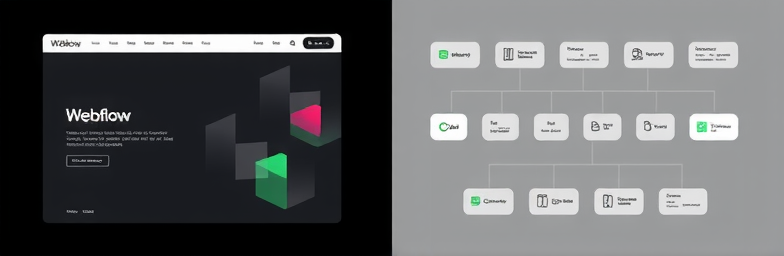
\nOn a Webflow site, a single form submit can trigger a clean chain via n8n:
\n- \n
- Validate and enrich the contact (e.g., company size, industry) and dedupe against the CRM. \n
- Create or update the record in HubSpot/Pipedrive with UTM, landing page, and campaign data. \n
- Score and route to the right owner based on territory, product interest, or ACV. \n
- DM the account owner in Slack with full context and a 1-click reply template. \n
- Send a personalized confirmation with a calendar link and pre-call questionnaire. \n
- Drop the lead into a light-touch nurture if they don’t book within 24 hours. \n
- Push an event to analytics and refresh retargeting audiences automatically. \n
Result: minutes, not hours, between interest and human response—plus clear data to optimize what’s actually working.
\nA quick before/after
\nComposite example from recent founder conversations: A B2B services firm shipped a sleek redesign. Hero lost the primary CTA, forms went to a shared inbox, and UTMs were stripped by a redirect. Average first response: 19 hours. Demo no-shows: 38%.
\nWe rebuilt the conversion architecture (restored a primary CTA, added solution pages by intent, embedded proof near CTAs), connected Webflow to the CRM via n8n (enrichment, routing, Slack alerts), and introduced a 15-minute speed-to-lead SLA with automatic scheduling and reminders. Within a quarter, qualified demos increased materially, first response dropped to minutes, and sales reported fewer no-shows and cleaner pipeline attribution. Same traffic. New system.
\nThe WeCraft way
\n- \n
- Modern design that sells: Webflow builds that load fast, explain clearly, and guide action with intent-based CTAs. \n
- Smart automation: n8n workflows that remove human latency—enrichment, routing, alerts, nurture, and analytics. \n
- Tangible impact: We design for pipeline, not pageviews. Clarity in the board deck: where leads come from and why they convert. \n
If your redesign flopped, your site may not be the problem—the system behind it is. Pair strong creative with operational rigor and you’ll feel the difference in days, not months. When you’re ready to turn a pretty website into a predictable growth system, WeCraft Studio can help.
Insights That Sparkle
Stay inspired with fresh ideas, industry tips, and behind-the-scenes stories. Our blog is where we share trends, knowledge, and a touch of creativity to help you grow, glow, and stay ahead.
%20(1).png)

.png)
.png)
.png)
%20(1).png)