

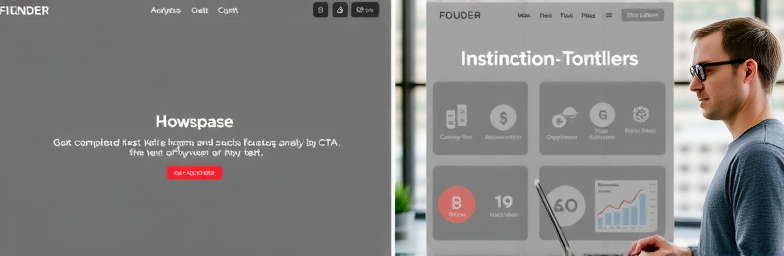
Your website looks nice — but it's quietly killing conversions.
You invested in a beautiful site. Clean typography. Hero video. Subtle animations. But leads are flat, demos are sporadic, and your CRM looks like a ghost town. The problem isn’t beauty — it’s that the site was designed to impress, not to convert.
Pretty is not persuasive
Design is a means, not the destination. A conversion-focused website is a system: messaging clarity, guided paths, proof at the right moments, and automation behind the scenes. Without that, a “nice” site becomes expensive window dressing.
Common symptoms founders tell us:
- People say “Love your site,” but your pipeline disagrees.
- Traffic is healthy, but form fills hover under 1%.
- Leads trickle in after hours, sit untouched, and go cold by morning.
- Prospects ask basic questions your pages should have answered.
Where good design goes bad
Here’s how aesthetic choices can quietly kill conversions:
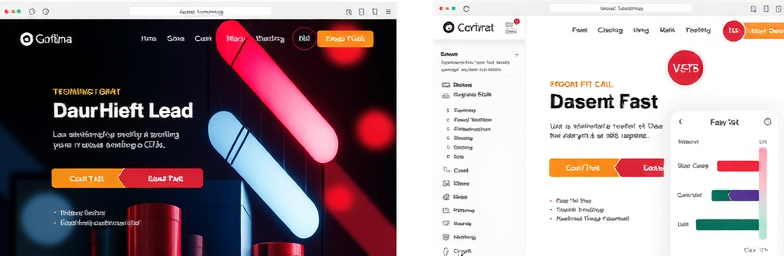
- Vague hero copy: “We innovate digital experiences.” Looks premium; says nothing. Your headline should name the outcome you create for a specific buyer.
- Invisible CTAs: A beautiful hero with no primary action. No sticky CTA. On mobile, the button falls below the fold.
- Animation overload: Fancy page loads that push your Largest Contentful Paint to 4s+. Every extra second can drop conversions by up to 7%.
- Weak contrast and tiny type: It photographs well, but users skim, miss key messages, and bounce.
- Navigation sprawl: Seven equal-weight links and a buried “Contact.” You need a single path for buyers who are ready now.
- Form friction: Eight fields “because sales asked for them.” Removing non-essential fields can lift completions by 20–50%.
What a converting website actually does
Think of your site like a great salesperson with a short memory. It must be clear, fast, and consistent, every time:
- Clarity over clever: Above the fold, state the problem you solve and the business outcome. Pair it with one primary CTA (Book a demo, Get pricing, Start the project).
- Guided paths: For each audience (e.g., founder vs. ops lead), create a short path: outcome proof → how it works → social proof → risk reversal → CTA.
- Proof at decision points: Case studies, before/after metrics, recognizable logos, and quantified outcomes near the CTA.
- Skimmable structure: Short paragraphs, subheads, and scannable bullets. People buy when they understand.
- Speed and stability: Optimize media, lazy-load non-critical assets, and keep layout shifts near zero. Performance is part of persuasion.
Example: A founder lands on your site from LinkedIn. In 8 seconds they should know who you serve, how you help, what results look like, and where to click. Anything else is decoration.
Measurement and momentum: where most sites stop
Even when the front-end is strong, most websites die after the click. That’s where automation turns a good site into a revenue system:
- Track intent: Pass UTM, page history, and form data into your CRM. Score leads on behavior, not just fields.
- Route instantly: Use n8n to assign the right owner, create a deal, and post to Slack within seconds. Speed-to-lead wins.
- Nurture intelligently: If no meeting is booked, trigger a short sequence with value, proof, and a single CTA.
- Close the loop: Push outcomes back to analytics so you know which pages, messages, and campaigns create revenue, not just clicks.
The WeCraft way: design + systems that convert
At WeCraft Studio, we build for outcomes. Our approach combines modern Webflow builds with n8n-powered automations so your website doesn’t just look premium — it performs.
- Message architecture: We run quick discovery to nail your value prop and buyer pains. No fluff, no generic claims.
- Conversion UX: Clear page hierarchy, mobile-first CTAs, frictionless forms, and social proof where it matters.
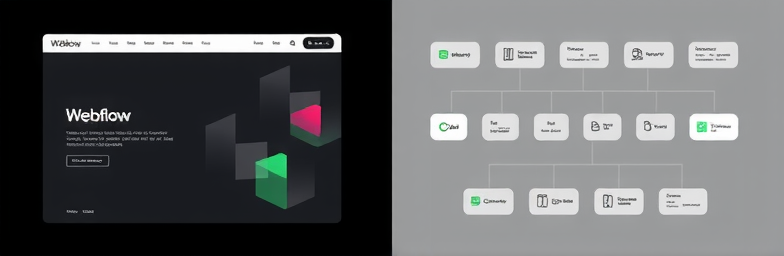
- Operational backbone: n8n workflows that sync Webflow → CRM, score leads, alert sales, and trigger follow-ups automatically.
- Analytics that matter: Event tracking, funnel reports, and content experiments tied to qualified pipeline — not vanity metrics.
What this looks like in practice: a client moved from a glossy brochure site at 0.6% conversion to a focused Webflow build with sticky CTAs, simplified forms, and automated routing. In 60 days, conversions held at 2.4% and average response time dropped under 10 minutes. Same traffic. Better system.
If it’s not built to sell, it’s built to stall
You don’t need louder ads or another redesign. You need a website that communicates clearly, guides decisively, and connects to an automation layer that never forgets to follow up.
If your site “looks great” but pipeline is thin, let’s turn it into a conversion system. We’ll keep the polish — and add the performance.
Insights That Sparkle
Stay inspired with fresh ideas, industry tips, and behind-the-scenes stories. Our blog is where we share trends, knowledge, and a touch of creativity to help you grow, glow, and stay ahead.
%20(1).png)

.png)
.png)
.png)
%20(1).png)