


If you're still using Zapier for ops, you're burning margin.
Zapier is brilliant for prototypes. It’s not where your core operations should live. The moment your business depends on it for lead routing, deal creation, invoices, or onboarding, you’re paying per task for every tiny click — and you feel it in margin.
Here’s the deeper issue: many founders invest in a beautiful website, then wonder why the pipeline is thin. A site that looks premium but doesn’t run a tight conversion system is just a brochure. Design without performance is decoration.
Aesthetics vs. performance
High-performing sites don’t win because they’re prettier. They win because they remove friction and make the next step obvious. The difference shows up in operations, not just pixels.
What actually drives conversion:
- Clarity in the first 5 seconds: headline, value, and a single primary CTA.
- Friction-balanced forms: ask what matters, hide what doesn’t, qualify without scaring off.
- Proof where it counts: one strong case study near the CTA beats a library no one reads.
- Speed and stability: sub-2s loads, zero broken forms, zero “we didn’t get your message.”
- Instrumentation: events tracked, UTMs captured, funnels known — not guessed.
The moment a lead submits, the real game begins. If your form just emails a generic inbox, you’re leaking revenue. If it fires a daisy chain of zaps, you’re paying for noise and tolerating fragility.
Why Zapier burns margin for ops
- Per-task billing on chatty workflows: enrichment, formatting, branching, retries — every step is a cost center.
- Spaghetti automations: scattered zaps, silent failures, no real observability, and someone on the team who has to “remember how it works.”
- Limits and lock-in: rate limits throttle you at peak times, premium steps add fees, migrating is painful.
- Data control: sensitive fields pass through another vendor, with little control over residency and retention.
- Hard to test: no proper versioning, environments, or systematic QA — only hope and a Slack alert when it breaks.
For experiments, Zapier is perfect. For revenue-critical ops, it’s expensive and brittle.
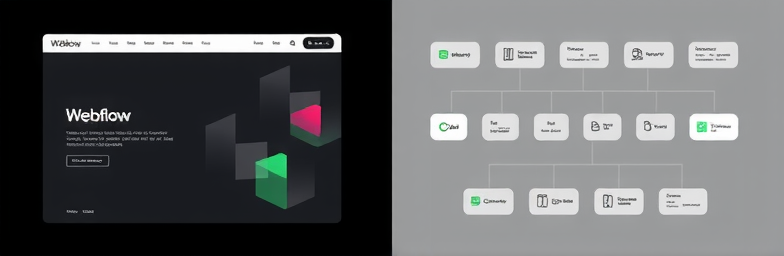
The WeCraft way: Webflow front-end, n8n ops engine
We design Webflow sites that look premium and act like machines — then wire them to n8n so your conversion system is reliable, observable, and cost-efficient.
A typical flow we build:
- Form posts to an n8n webhook (no plugins to babysit).
- Data is cleaned, deduped, and enriched (company size, tech stack, intent signals).
- Lead is scored. If qualified: auto-create CRM record, Slack the owner with context, propose a calendar slot, and generate a brief. If not: route to a nurture sequence with a clear next step.
- SLAs are enforced: if no response in 15 minutes, escalate to a channel or SMS.
- Everything is logged: outcomes, errors, latency. You can see where time and margin go.
Because n8n can be self-hosted or run in a controlled cloud, you get versioning, proper error handling, retries, queues, and lower variable cost at scale. Translation: fewer surprises, faster responses, and margin you keep.
What “conversion” actually looks like
It’s not a prettier hero. It’s a system that shortens time-to-first-response, reduces manual triage, and raises close rate.
Example scenario:
- Before: Elegant site, one long form, zaps emailing a shared inbox. Average first reply: 10 hours. Leads fall through the cracks on weekends. Marketing can’t see which campaigns convert.
- After WeCraft: Clear CTA above the fold. A two-step form that qualifies. n8n routes hot leads to the right owner with context, books meetings automatically, and opens CRM opportunities with a standardized checklist. First reply: under 10 minutes. Zero “lost” submissions. Pipeline visibility end-to-end.
Same traffic. Different system. The lift comes from speed, relevance, and consistency — not another coat of paint.
The math most teams ignore
Even modest sites create noisy workflows. Every extra formatter, lookup, or filter in a zap is a metered step. Multiply by form fills, newsletter signups, trials, invoices, refunds, internal alerts, and retries — and you’re paying variable tax on your own growth.
Founders who move to n8n often see two wins: 60–90% lower automation spend and a measurable uptick in conversion because the process stops breaking at the edges. Margin improves on both sides of the P&L.
How we implement without drama
- Audit: Map your funnel, forms, zaps, and data paths. Identify failure points and cost hotspots.
- Rebuild: Webflow for speed and clarity. n8n for routing, enrichment, SLAs, and logging. Git-backed workflows and test cases, not wishful thinking.
- Instrument: Define success events, set alerts, and give your team a simple dashboard so ops becomes predictable.
Bottom line
If you’re still running core ops on Zapier, you’re paying a tax on every win. A modern site without a conversion system is margin left on the table. WeCraft Studio builds both: premium Webflow front-ends and n8n-powered operations that turn visitors into revenue — reliably, measurably, and at a lower cost to serve.
Ready to stop burning margin? Let’s design the system that pays for itself.
Insights That Sparkle
Stay inspired with fresh ideas, industry tips, and behind-the-scenes stories. Our blog is where we share trends, knowledge, and a touch of creativity to help you grow, glow, and stay ahead.
%20(1).png)

.png)
.png)
.png)
%20(1).png)